
How snake oil whiskey, shady rectifiers, and a handful of reformers turned legal fine print into America’s first real guarantee of quality
Before bourbon earned trust, it had to prove it.
Bottled in Bond wasn’t just a law—it was a line drawn in the sand.
There’s no shortage of folklore when it comes to bourbon, but if you spot “Bottled in Bond” on a label, you’re holding a piece of American history—whether you know it or not. Sure, it sounds like a relic from your great-granddad’s liquor cabinet, but those three words hide a wild tale. We’re talking snake oil salesmen, toxic whiskey, and the first time Uncle Sam really tried to keep drinkers from getting swindled—or worse.
Before Bottled in Bond became a mark of quality, the whiskey business was a free-for-all. Distillers were scrambling for market share, and plenty of shady operators were willing to cut every corner—sometimes with deadly results. Bottled in Bond wasn’t just a clever slogan; it was a promise that what you poured into your glass wouldn’t kill you, and that it came from a distillery with nothing to hide.
So, how did bourbon go from a backroom gamble to a symbol of American craftsmanship and trust? It took a strange alliance of whiskey makers, politicians, and a few reformers who’d finally had enough. Here’s how a bit of legal fine print became one of the most important (and misunderstood) guarantees in American spirits.
The rules for Bottled in Bond are strict and straightforward: the whiskey must come from one distillery, made during a single distillation season (either January–June or July–December), aged at least four years in a federally bonded warehouse, and bottled at exactly 100 proof. The label has to clearly state where it was distilled and bottled, and the only thing allowed in the bottle besides whiskey is pure water.
This was, in every sense, America’s first consumer protection law—crafted to fight dangerous, adulterated spirits by guaranteeing purity and transparency. What started as a 19th-century tax and safety measure has become, more than a century later, a gold standard for quality.
After the Civil War, as distilleries fired back up, the bourbon trade turned into the Wild West. “Rectifiers”—some honest, some not so much—started blending neutral grain spirits with anything that might help mimic the look and taste of real whiskey: tobacco spit, iodine, prune juice, even sulfuric acid. Some were just trying to stretch a dollar, while others took downright dangerous shortcuts. Just thinking about these concoctions will turn your stomach, and it’s not hard to imagine how sick people might have gotten.
As I dug into this history, I could sort of understand how tobacco spit, iodine, and prune juice might trick the eye—turning clear spirits the right shade of brown. But how did anyone think this would fool your taste buds? That’s where things get even weirder.
Tobacco spit added bitterness and leathery notes, echoing the tannins real bourbon gets from charred oak barrels. It also delivered a nicotine buzz, which distracted from watered-down alcohol. Iodine, in small doses, added a medicinal “complexity” and a hint of age—enough to make neutral spirits taste less like vodka and more like something that had been aging in a rickhouse. Prune juice contributed sweetness and body, helping to fake the mouthfeel and dark fruit notes bourbon fans love.
Sulfuric acid was the most shocking—and dangerous—ingredient. Real bourbon has that signature “Kentucky hug,” a warm burn as it goes down. If fake whiskey was too diluted, even a dash of acid could mimic the burn—at a real risk to health.
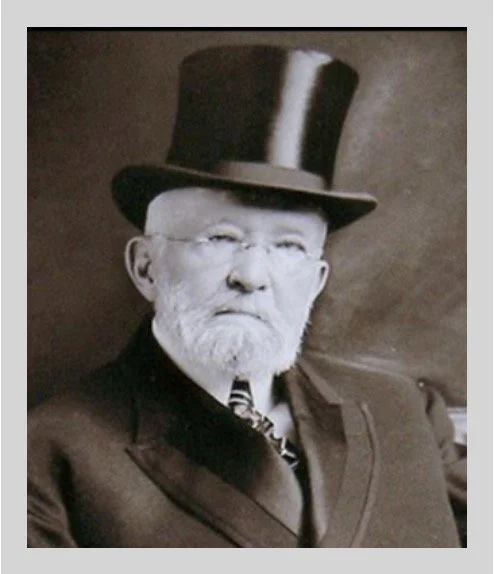
Enter the Bottled in Bond Act of 1897, championed by Colonel E.H. Taylor, Jr., who became its most visible advocate. But Taylor couldn’t do it alone. He enlisted John G. Carlisle, a Kentuckian and Secretary of the Treasury, convincing him that the government was losing tax dollars to these shady rectifiers. Carlisle’s support was crucial. George Garvin Brown was already bottling whiskey in glass to prevent tampering, and James E. Pepper joined Taylor in lobbying for reform. The Overholt family and Pennsylvania’s rye producers also joined the cause, eager to protect their reputations from counterfeiters.
Passing the act was no easy feat. The rectifiers’ lobby was well-funded and aggressive, arguing that their “blended” whiskeys were not only legitimate but better and more consistent than straight bourbon. The fight was fierce.
In a world full of slick packaging and vague backstories, Bottled in Bond is still doing the job it was built for: forcing transparency. It’s not just a marketing gimmick—it’s a legal contract. If you’re a label reader (and honestly, you should be), you’ll notice that no brand can hide where their whiskey comes from or how old it is when “Bottled in Bond” is on the label.
Today, Bottled in Bond is a badge of honor. Old Grand-Dad Bonded, Henry McKenna 10-Year, and newcomers like Leiper’s Fork Bourbon and Tennessee Whiskey are all in the club. So next time you pour a glass of Colonel E.H. Taylor, Jr. Small Batch or Old Overholt Bonded Rye, give a little toast to the folks who fought to make sure what’s in your glass is the real deal—pure, honest, and (thankfully) free of tobacco spit.
From The Same Table
