Long Before Bourbon Became an Industry
“The farther backward you can look, the farther forward you are likely to see.” Winston Churchill
Editor’s Note: The Story Before the Barrel is an ongoing series exploring the forgotten agricultural roots of American whiskey. Before bourbon became an industry, it was a harvest. Before it was a barrel, it was a field. This series follows that journey back to where it truly began.
Before Bourbon Had a Name
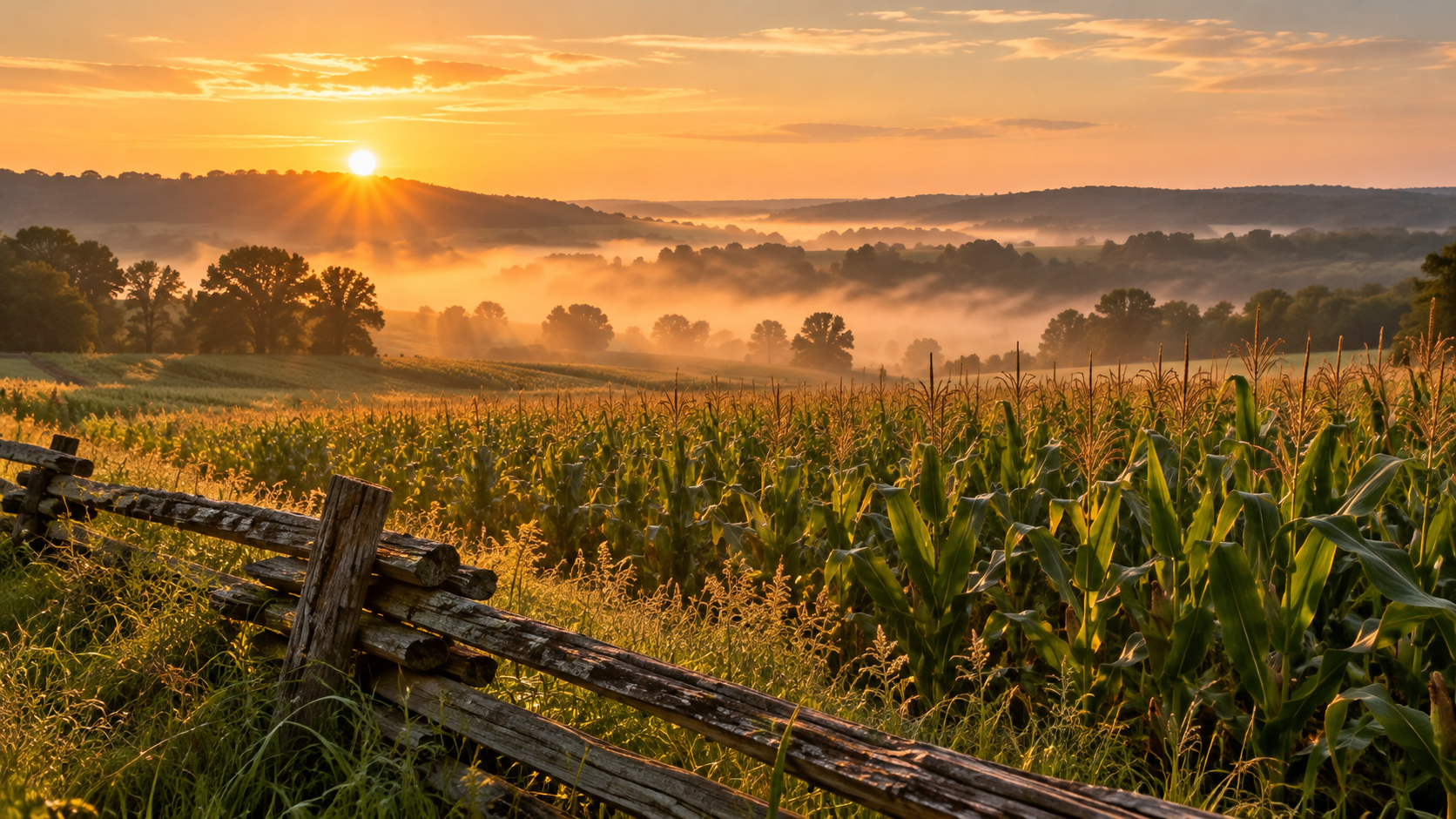
Long before Kentucky became synonymous with bourbon, another story was quietly unfolding beneath the boots of the people who worked its soil.
It wasn’t written in rickhouses or recorded on distillery ledgers. It wasn’t measured by proof, age statements, or mash bills. It unfolded one growing season at a time, in fields where every spring carried equal measures of promise and uncertainty.
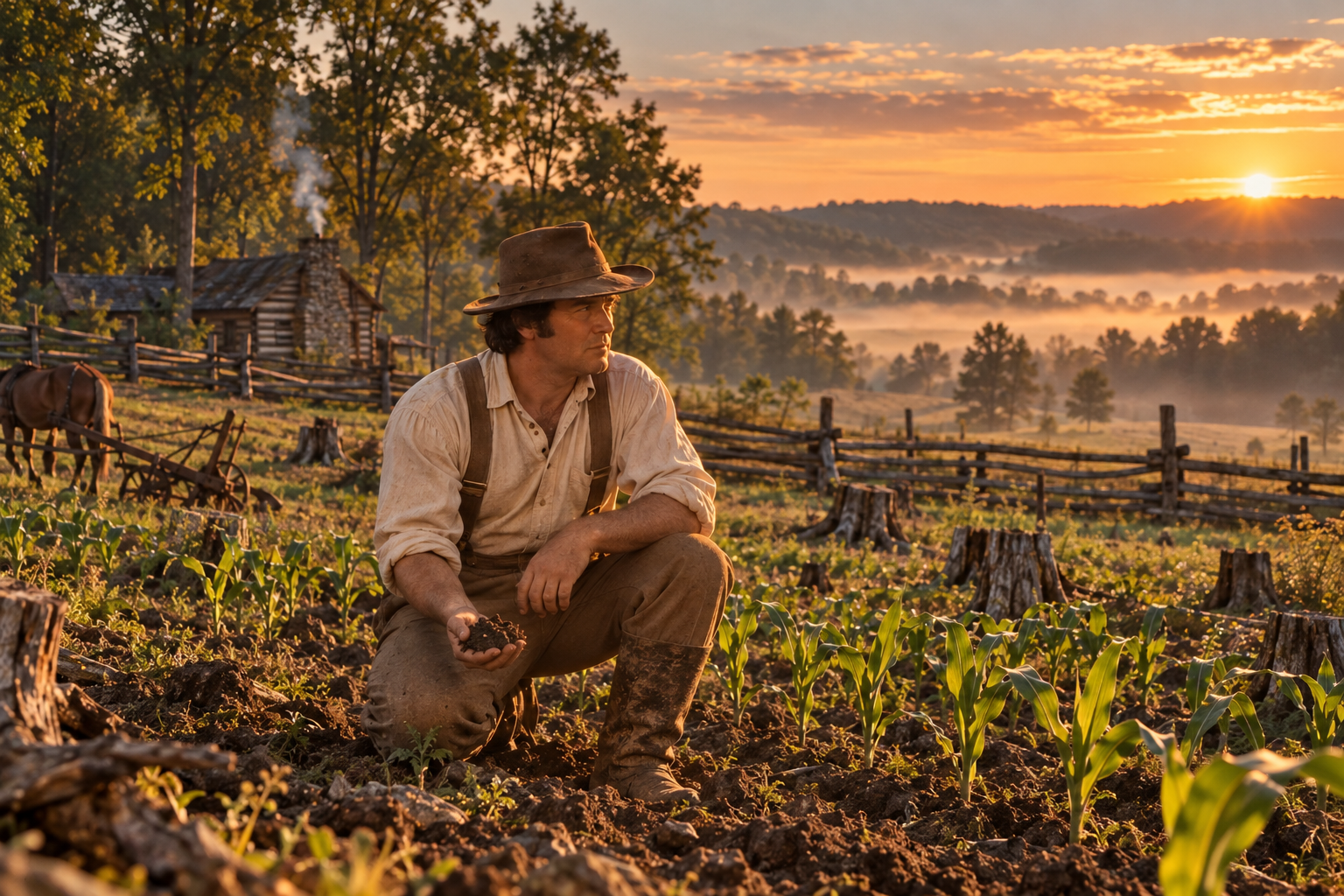
Imagine standing beside a Kentucky farmer just after sunrise in the opening years of the nineteenth century.
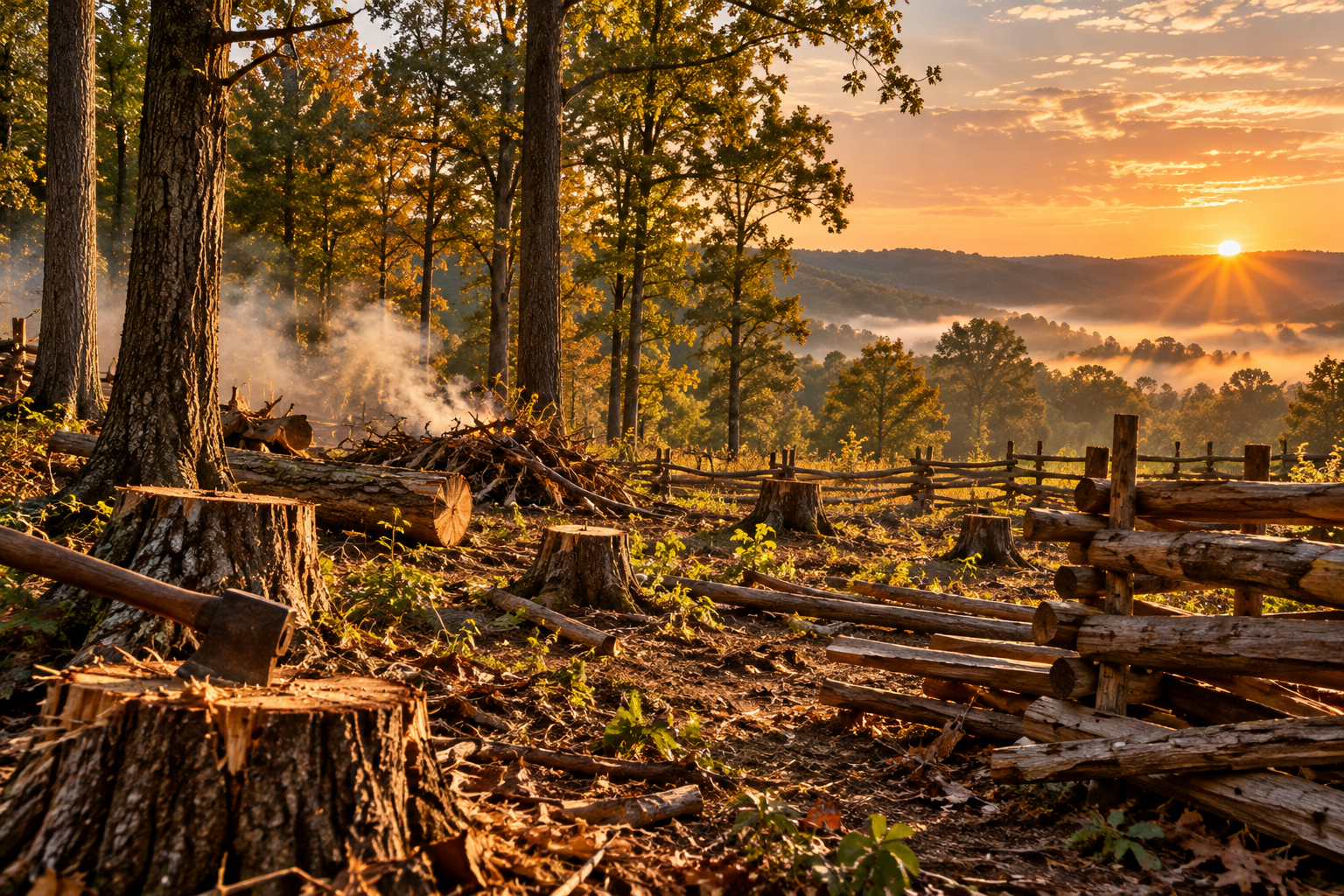
The morning air is cool enough that the earth still holds the night’s moisture. A whippoorwill calls from the edge of the timber before surrendering to the chatter of songbirds greeting the day. The smell of damp limestone soil rises with each step across a field only recently cleared of towering hardwoods. Tree stumps still interrupt the rows, silent reminders that this land was forest not long ago.
The farmer pauses.
He kneels, reaches into the freshly turned earth, and lets a handful of soil slip slowly through his fingers.
He is not thinking about bourbon.
He isn’t wondering whether historians two centuries from now will celebrate Kentucky as the birthplace of America’s native spirit.
His concerns are far more immediate.
Will the last frost finally stay behind them?
Has enough rain fallen?
Will the seed saved from last year’s harvest perform as well this season?
Will there be enough corn to feed the family? Enough to see the livestock through another winter? Those were the questions that followed every Kentucky farmer into the field each spring and lingered until the last wagon was filled in autumn. Survival came first. Everything else came after. Yet Kentucky’s fertile soil often rewarded hard work with abundance. Some years the harvest yielded more than a family could eat, more than their livestock required, and more than neighboring communities could readily use.
That abundance created a different kind of challenge. Corn was bulky, heavy, and costly to haul over rough frontier roads, often worth less at market than the labor required to get it there. The men and women who crossed the Appalachians did not arrive empty-handed. Alongside seed corn, family Bibles, cast-iron kettles, and the few possessions a wagon could carry, they brought something no less valuable: knowledge. They carried generations of distilling traditions from Scotland, Ireland, Germany, and England, but they also brought something uniquely American. Many had already learned in Virginia, Maryland, Pennsylvania, and the Carolina backcountry that North America’s native grain could be transformed into a valuable spirit. They did not discover that truth in Kentucky. They carried it with them.
What Kentucky offered was something few places could equal. Rich limestone soils produced remarkable harvests. Springs and creeks threaded through the landscape, rivers connected frontier settlements to distant markets, and fertile land rewarded hard work with extraordinary abundance. Here, knowledge that had crossed an ocean and matured in the American colonies found the ideal place to flourish. Bourbon was not born from extravagance or sudden inspiration. It emerged when generations of agricultural wisdom met a landscape capable of producing more corn than a family could consume and where practical farmers transformed that abundance into something easier to preserve, transport, and trade.
History has a way of making what followed seem inevitable. Today we often tell the story as though bourbon suddenly appeared in Kentucky, fully formed and waiting to become America’s native spirit. The truth is quieter and far more human. Long before Kentucky became synonymous with bourbon, farmers throughout the colonies were already adapting European distilling traditions to an American grain. Kentucky did not invent corn whiskey. It became the place where centuries of inherited knowledge, frontier necessity, and extraordinary agricultural abundance came together to shape something entirely its own.
Today we speak of Kentucky as though it were always destined to become bourbon country and Tennessee as though whiskey had forever been part of its identity. Yet during the late eighteenth and early nineteenth centuries, neither story had been written. Across the expanding American frontier, from Virginia and Pennsylvania to Kentucky and Tennessee, families faced remarkably similar challenges. They worked unfamiliar landscapes with limited tools, uncertain harvests, and the understanding that survival depended as much upon observation as determination.
There were no railroads carrying grain across the country.
No standardized seed catalogs promising predictable yields.
No commodity markets establishing prices before a crop ever left the field.
Only farmers learning, season after season, what the land was willing to teach.
If we truly want to understand where American whiskey begins, we must begin long before bourbon itself.
We must begin with a grain that was already ancient when the first European ships appeared on America’s shores.
Not the endless, uniform rows of yellow dent corn that stretch across much of America’s landscape today, but with a grain first cultivated thousands of years ago by Indigenous peoples whose agricultural knowledge transformed a wild grass into one of the world’s most important food crops. Long before European settlers learned to distill it, Native communities had spent millennia selecting, improving, and adapting maize to the climates of North America. Bourbon’s story begins not in a barrel, nor even in a still. It begins with Indigenous farmers whose innovation made every harvest that followed possible.
A Gift Refined Across Millennia
Corn was never simply discovered growing wild.
Its story begins nearly 9,000 years ago in the Balsas River Valley of what is now southwestern Mexico, where generations of Indigenous hunter-gatherers accomplished one of humanity’s greatest agricultural achievements. Long before the rise of the civilizations we recognize today, they transformed an unassuming wild grass known as teosinte into maize.
The change did not happen in decades.
It unfolded over millennia.
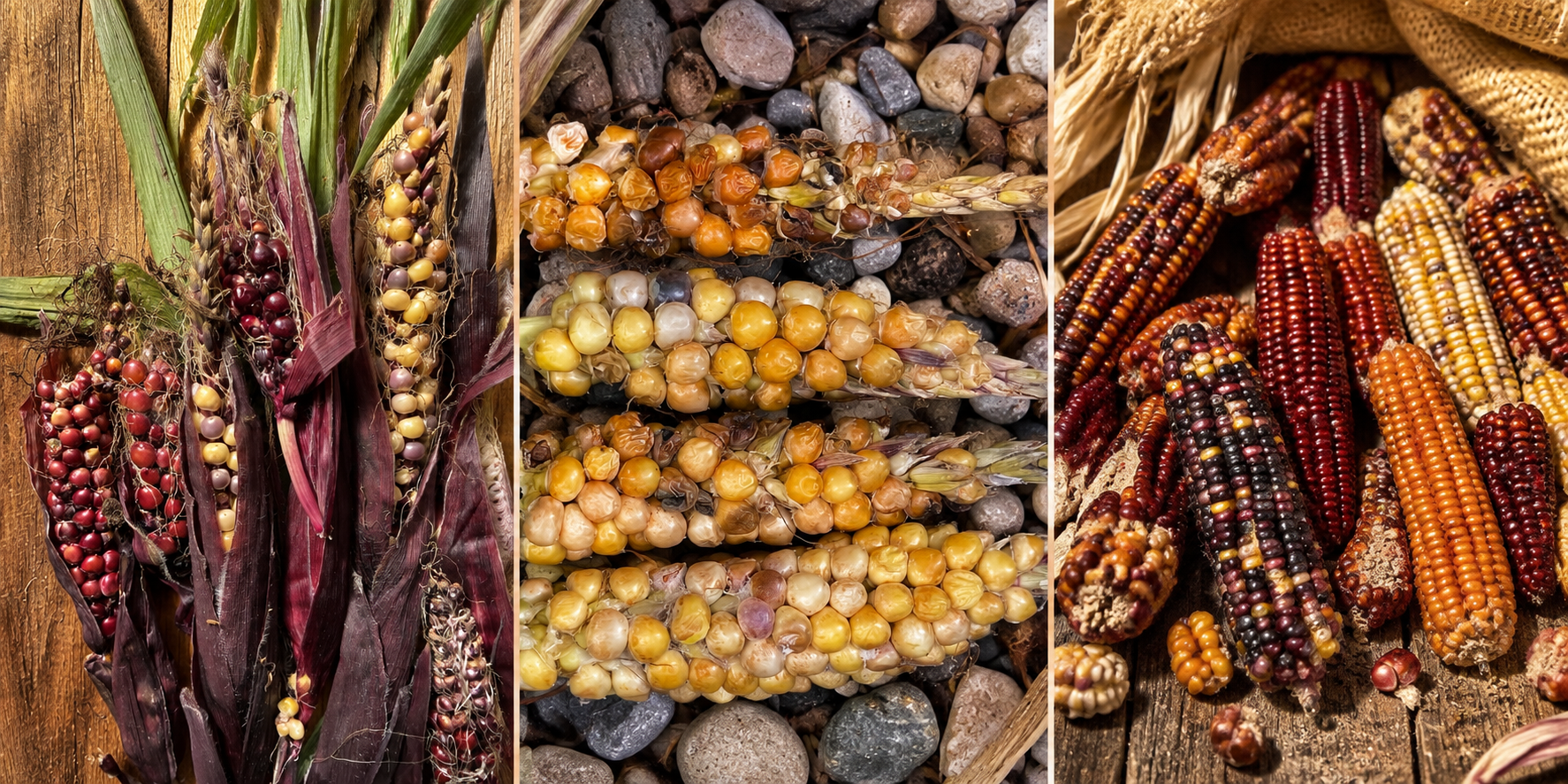
Generation after generation selected plants that produced larger ears, softer kernels, stronger stalks, and greater yields. Each harvest became both a reward and a lesson, with the finest seed carefully saved to shape the next season. Long before the language of genetics existed, Indigenous farmers understood that the future of a crop rested in the choices made after every harvest.
The result was nothing short of extraordinary.
Maize became capable of feeding entire civilizations.
From the valleys of southern Mexico, maize began one of history’s longest journeys. Over thousands of years, it traveled north through migration, trade, and the exchange of knowledge among Indigenous communities. With every generation, it adapted to new climates, shorter growing seasons, higher elevations, and different soils. By the time Europeans reached North America, maize had already become one of the continent’s defining crops, cultivated from the deserts of the Southwest to the forests of the Eastern Woodlands.
As maize spread across the continent, it adapted to the places where it was planted. Communities in cooler northern climates developed hardy flint varieties capable of surviving shorter growing seasons. Farther south, softer, starch-rich Gourdseed corns flourished in warmer temperatures and longer summers.
Every adaptation reflected something deeply human.
Someone noticed a stalk that stood a little taller.
Someone saved seed from an ear that filled more completely.
Someone planted it again the following spring.
Agriculture has always advanced that way.
Not through sudden revolutions, but through countless quiet decisions made by people whose names history rarely remembers.
By the time Europeans first set foot in North America, maize was already woven into the continent’s agricultural landscape. It had been shaped by thousands of years of Indigenous knowledge, adapted to diverse climates, and cultivated with a sophistication that many newcomers neither expected nor fully understood.
The settlers who crossed the Atlantic brought seeds of their own. Wheat. Barley. Rye. Grapes. Crops that had sustained Europe for centuries. They assumed those familiar companions would flourish in the New World.
Many did not.
Different soils, unfamiliar climates, relentless pests, and unpredictable weather often humbled even experienced farmers. Some European crops eventually adapted. Others required decades of trial and error before they found success. It quickly became apparent that thriving in North America demanded more than simply importing Old World agriculture.
It required learning from the land itself.
And sometimes, from the people who already knew it.
Long before a barrel ever held whiskey, the knowledge that made bourbon possible was already taking root in the soil of North America.
Wisdom Already Rooted in the Land
When European settlers first encountered Indigenous agriculture, they discovered something both familiar and entirely new.
The crops themselves were recognizable enough. Corn, beans, and squash filled fields throughout much of eastern North America. Yet it was the relationship between those plants that revealed a depth of agricultural understanding many newcomers had never witnessed.
For countless generations, Indigenous communities had cultivated what we now call the Three Sisters. Corn rose first, its sturdy stalk becoming a living trellis for climbing bean vines. Beans quietly returned nitrogen to the soil, replenishing what the corn consumed. Broad squash leaves spread across the ground like a protective quilt, shading the earth, conserving moisture, and discouraging weeds from taking hold.
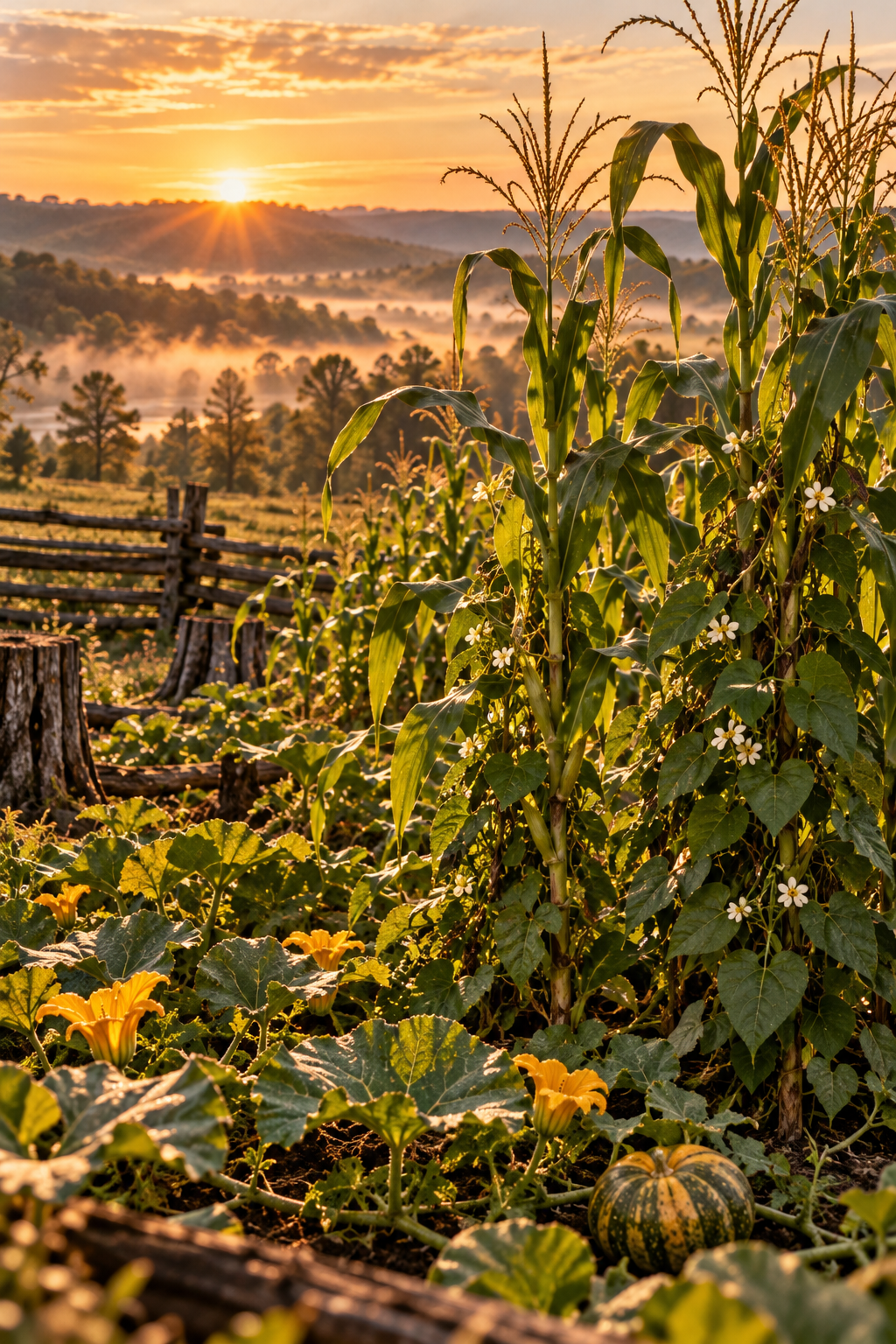
Today we recognize it as an elegant example of ecological balance. To the people who developed it, it was simply good farming.
Long before the science of agronomy existed, Indigenous farmers understood that the healthiest fields were those in which each plant strengthened the others. Their knowledge had not been gathered from textbooks or laboratories, but from centuries of careful observation, experimentation, and an intimate relationship with the land itself.
Early European explorers took notice.
When Samuel de Champlain traveled along the northeastern coast in the early seventeenth century, he described fields where corn grew in earthen mounds, beans climbed gracefully around the stalks, and squash filled the spaces between. Thomas Hariot recorded similar observations in Virginia, noting that maize, beans, and pumpkins shared the same fields rather than occupying separate plots. Captain John Smith wrote of carefully spaced hills where corn and beans rose together, while the Dutch statesman Adriaen van der Donck later described Indigenous farmers sowing beans at the base of corn so the vines could climb naturally upward while squash shaded the soil below.
Their words differed.
Their observations did not.
Again and again, European witnesses described an agricultural system remarkable for both its simplicity and its effectiveness.
Yet history rarely follows a straight path.
Although frontier settlers eagerly adopted maize, they seldom embraced the complete Three Sisters system for long.
The reasons were largely practical rather than philosophical.
European agriculture had evolved around oxen, horses, and iron plows. Fields were expected to accommodate draft animals moving in straight rows. As settlements expanded westward, farmers found that intertwined vines of beans and sprawling squash complicated cultivation and harvesting with livestock. Gradually, the elegant polyculture practiced by Indigenous communities gave way to wider rows, separated crops, and farming methods better suited to European equipment.
The corn remained.
The farming around it changed.
It is one of the earliest examples of two agricultural traditions meeting on American soil, not with one entirely replacing the other, but with each leaving an unmistakable imprint. Settlers carried forward the crop itself, the practice of planting in hills, and the understanding that maize belonged in North American fields. At the same time, they reshaped its cultivation to fit their own customs, tools, and growing communities.
That quiet exchange would influence American agriculture for generations.
As settlement pushed beyond the Appalachian Mountains into Kentucky and Tennessee, pioneers carried more than wagons, livestock, and copper stills. They also carried seed. Some of those seeds traveled remarkable distances, selected and preserved through countless growing seasons before finally reaching the frontier.
Every handful of these seeds represented accumulated knowledge.
Not merely from one farmer.
Not even from one generation.
But from thousands of years of observation stretching back to the first Indigenous cultivators who transformed teosinte into maize.
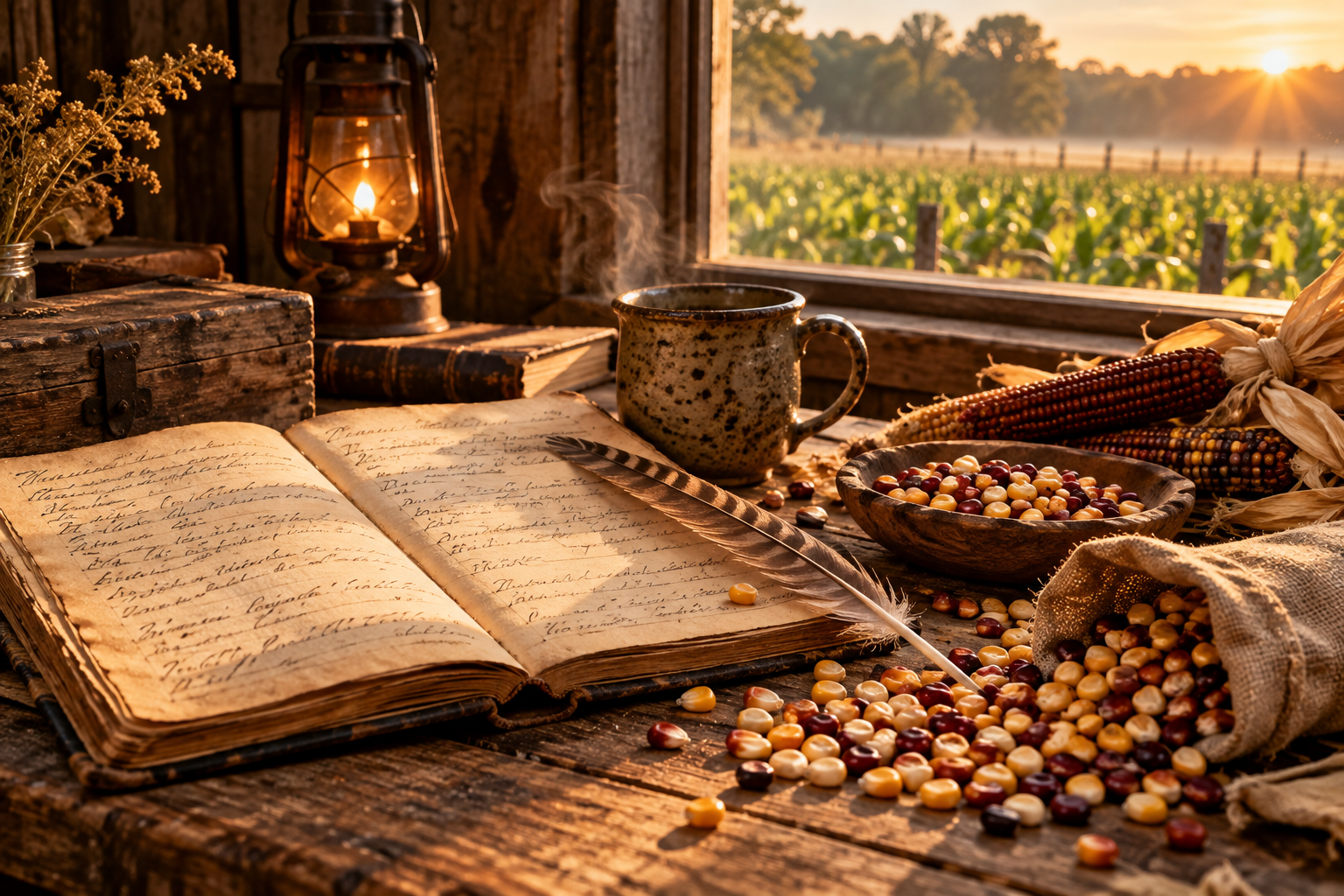
In the palm of a farmer’s hand, a handful of seed looked ordinary enough. Dry kernels. Different colors. Different sizes. Nothing about them suggested that they carried the work of thousands of years. Yet within each rested the promise of another harvest and the accumulated wisdom of generations who had carefully chosen which seed deserved another season.
Those early Kentuckians may never have known the extraordinary story contained within the seed they planted. Yet they benefited from it every spring. Every kernel carried the accumulated wisdom of countless generations, preserved by people whose names history no longer remembers.
A frontier farmer likely gave little thought to the extraordinary journey that had placed corn in his hands. He was concerned instead with whether the seed would emerge after planting, whether the rains would come at the proper time, and whether the harvest would be enough to sustain another year.
History, after all, is easiest to recognize in hindsight.
Life is lived looking toward the next season.
And on the American frontier, every season taught a lesson.
Every Harvest Told a Different Story
By the time settlers crossed the Appalachians into Kentucky, they had learned an important truth.
There was no such thing as simply planting corn.
There was only planting the right corn.
Modern agriculture has conditioned us to think of corn as a single crop. Today, fields often stretch for miles in remarkable uniformity, each row growing almost indistinguishable from the next. Consistency has become both expectation and necessity.
The frontier knew no such luxury.
Every handful of seed represented a choice shaped by experience, local knowledge, and sometimes plain necessity. The seed a farmer dropped into Kentucky soil carried generations of observation behind it, each kernel chosen because somewhere, sometime, it had proven worthy of another season.
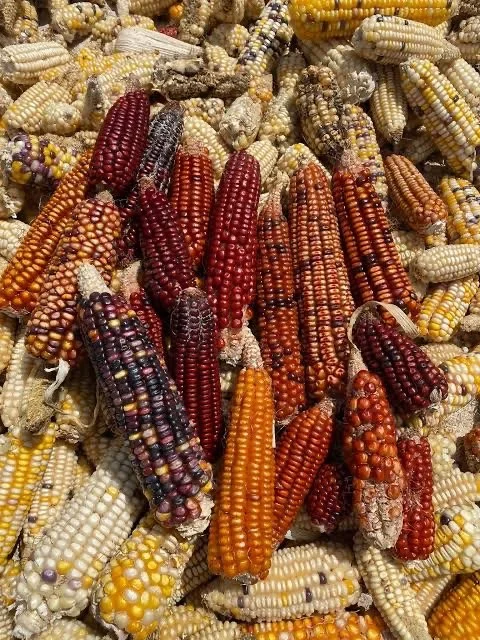
Some farmers favored early Gourdseed varieties, whose soft, floury kernels ground easily beneath heavy millstones and yielded generous starch for bread, livestock feed, and eventually the mash tubs that stood beside so many frontier barns. Others relied on hardy Northern Flint corns, valued not for abundance but for resilience. Their hard outer shells resisted rot, tolerated shorter growing seasons, and often endured where softer varieties struggled.
Neither was universally better.
Each answered a different question the land was asking.
Over time, those ancient lineages would continue to cross and adapt, eventually giving rise to iconic heirloom varieties such as Bloody Butcher and, later still, Hickory King. Their names would become familiar across rural America, but their story had begun generations earlier through the quiet exchange of seed between neighbors, families, and communities who were constantly searching for crops better suited to their own fields.
That search never truly ended.
No two farms were exactly alike.
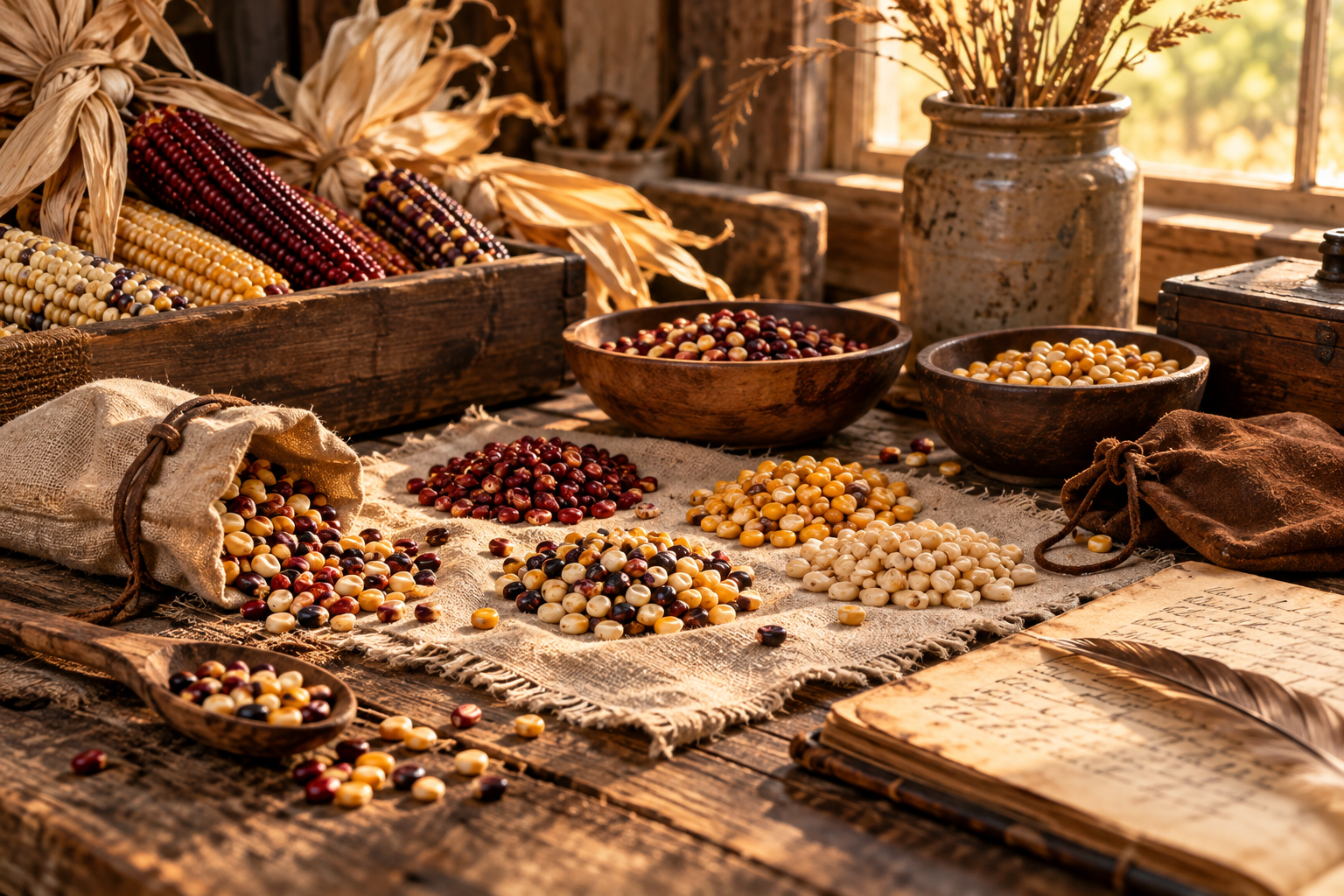
One rested on deep limestone soils that held moisture through a dry summer. Another climbed thinner hillsides where rain disappeared almost as quickly as it fell. A creek might flood one bottom field while leaving another untouched only a mile away. Even neighboring farms often harvested corn that looked, milled, and tasted differently because the land itself demanded different things.
Today we call those differences terroir.
Frontier farmers never needed a word for it.
They simply called it home.
A warm April could coax tender shoots from the earth only to have a late frost erase weeks of promise overnight. Summer drought curled broad green leaves into tight rolls, each one trying desperately to conserve the little moisture left beneath the soil. Heavy rains brought different worries, inviting mold into the crib before winter ever arrived. Armyworms could strip young corn almost overnight. Weevils found their way into poorly stored grain, quietly consuming a family’s winter security one kernel at a time.
Every spring began with optimism.
Every autumn delivered its verdict.
Every season taught humility.
Farm journals from the late eighteenth and early nineteenth centuries reveal page after page of farmers sharing hard-earned observations. They debated seed selection. They argued over crop rotation. They discussed exhausted soils, the value of crushed limestone, and whether clover or rye best restored fertility to worn-out fields. These were not academic conversations. They were practical ones, born from the simple desire to leave the soil stronger than they inherited it and to ensure another harvest the following year.
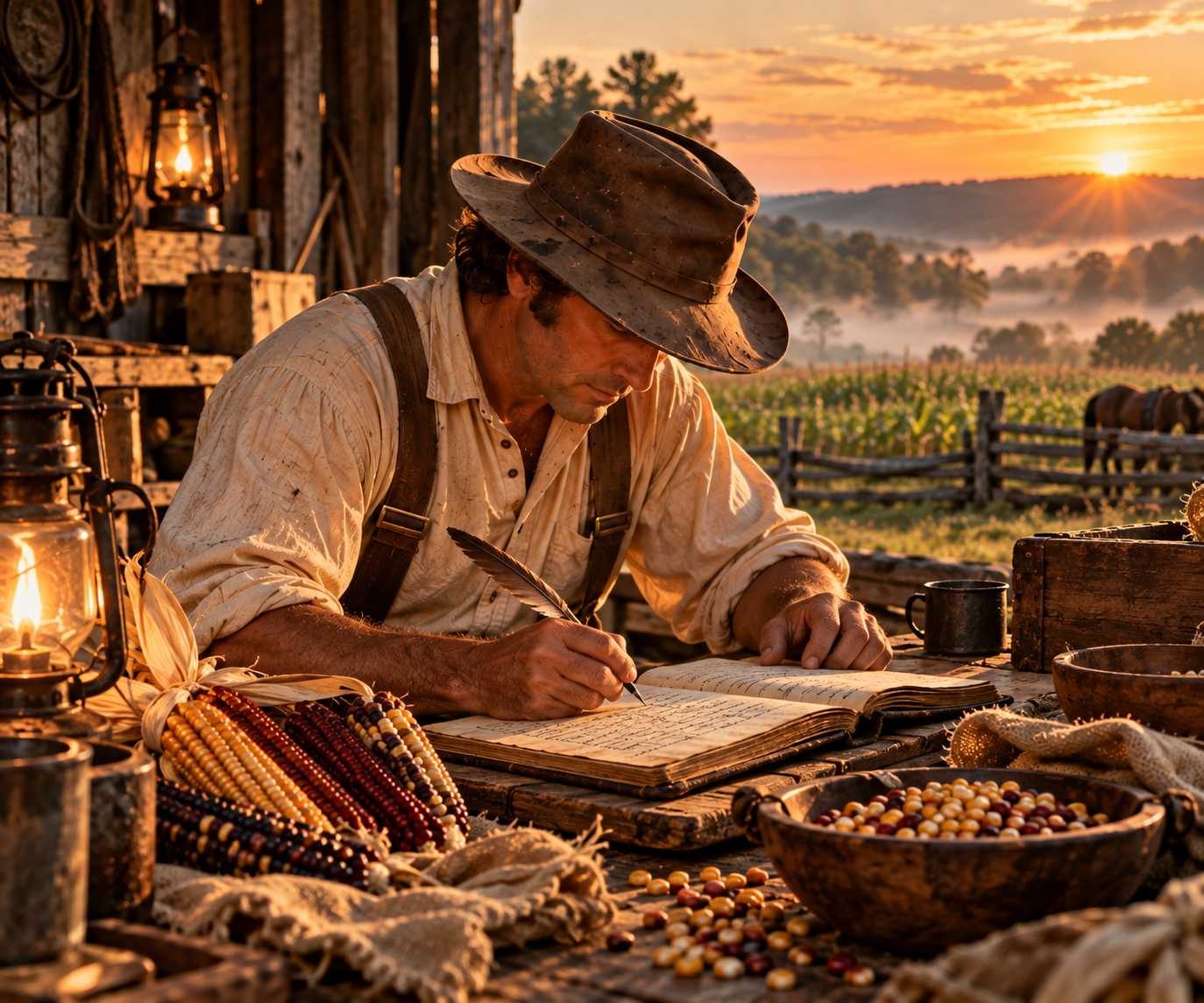
Knowledge spread much the same way seed did.
Neighbor to neighbor.
Farm to farm.
Generation to generation.
Long before agricultural colleges existed, Kentucky’s countryside had already become its own classroom.
One farmer discovered that a certain variety stood better against the wind.
Another noticed which ears stored more soundly through winter.
Someone else learned that seed taken from the strongest stalks produced a more dependable crop the following year.
Few of those lessons were ever written down.
Most were carried home at the end of a day’s work, discussed across split-rail fences, or exchanged while waiting for grain to be ground at the local mill.
That, too, became part of the harvest.
History often remembers hardship because hardship leaves records. Yet those records rarely capture the quieter moments that kept farming families rooted to the land.
There was joy in the work.
There was satisfaction in watching a field emerge after weeks of careful planting. There was quiet pride in seeing straight rows stretching toward the tree line. There was gratitude when rain arrived exactly when it was needed, and a sense of accomplishment in filling a crib before winter settled across the countryside.
A successful harvest represented more than food.
It represented another year secured.
It meant bread on the table, livestock fed through winter, seed reserved for another spring, debts perhaps repaid, and, if fortune had been generous, a surplus that opened possibilities beyond simple survival.
For many frontier families, that surplus would become something far more valuable than corn itself.
But before it became whiskey…
Before it filled a barrel, crossed a river, or carried Kentucky’s name beyond its borders, it was simply a farmer standing in his field at day’s end.
His boots were muddy. His hands were callused. His eyes measured rows instead of profits.
He wasn’t thinking about bourbon history.
He was simply hoping it would be enough.