Charcoal, Rectifiers, and the Real Story of the Lincoln County Process
If you ask the average whiskey drinker where charcoal filtration began, they’ll likely point straight to Tennessee, and maybe even to a particular county. But the story—like any true American whiskey—has far more complexity. Charcoal filtering, the backbone of the so-called Lincoln County Process, is a technique with roots that reach from ancient medical treatises to the backwoods of colonial America, and from British gin palaces to modern bourbon bottling lines.
Ancient Beginnings: Charcoal’s First Calling
Long before whiskey filled American barrels, wood charcoal played its part in the world’s oldest households. Sanskrit medical texts and Egyptian papyri from as early as 1500 BCE describe charcoal’s use for purifying water and healing wounds. By the late 1700s, European chemists like Lowitz had demonstrated how wood charcoal could deodorize and clarify organic liquids—a discovery quickly put to work in sugar refineries and spirit rectifying shops across the continent.
Colonial America: Survival, Adaptation, and the Birth of Rectifiers
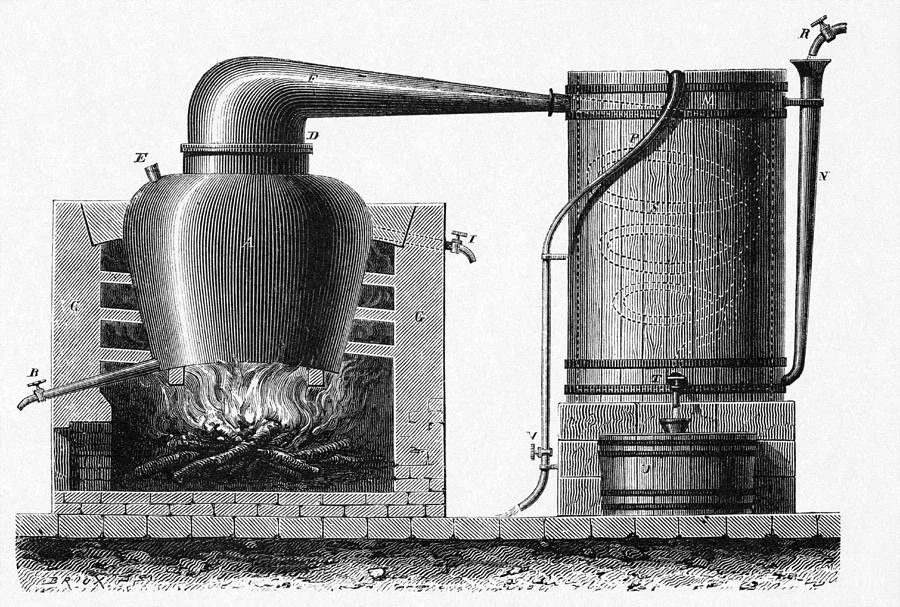
When whiskey-making arrived in the American colonies, it was a crude affair. Farm stills—often little more than copper or iron kettles—produced raw, fiery spirits loaded with impurities. These “white dogs” were harsh, bearing the bite of fusel oils and sulfur compounds.
Enter the rectifier: a trade born in 18th-century Britain and soon indispensable in America. In Britain, the rectifier’s craft was formalized by the 1720s, with specialists buying raw grain spirit from malt distillers, then redistilling or filtering it with charcoal and other agents. They transformed rough spirit into gin or “cologne spirits,” selling these refined products to taverns and publicans. In the American context, distillers rarely bottled or sold their own liquor. Instead, merchant grocers and urban rectifiers bought raw high wines from farm stills, then worked their own magic with charcoal, bone dust, and redistillation. It was rectifiers who made rough-hewn spirits suitable for city markets, selling them under bespoke shop labels. This blending and purification became the dominant force in American whiskey by the 19th century.
A Tradition Carried Across Continents
Charcoal filtration in America didn’t arise solely from European science. Historical research highlights the critical influence of enslaved Africans, who brought their own traditions of using wood charcoal to purify water and palm wine. Their knowledge and skill—applied daily in plantation distilleries—helped shape the practical, everyday reality of American whiskey-making.
Early Manuals and the Spread of Industry Know-How
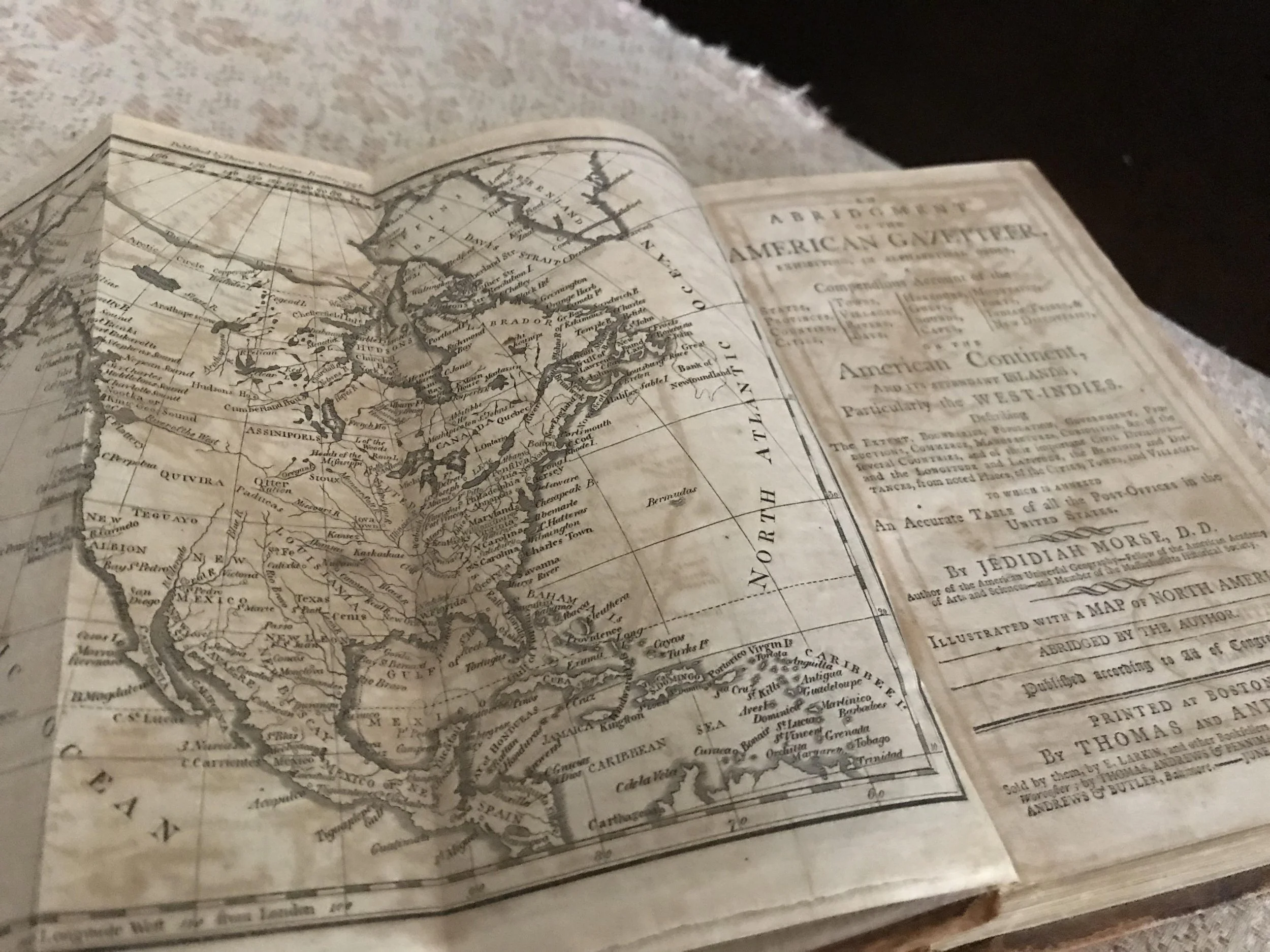
By the early 1800s, charcoal filtering was no secret. Manuals like Michael Krafft’s The American Distiller (1804) and Harrison Hall’s The Distiller (1813), published in Philadelphia, explicitly recommended charcoal as the rectifier’s tool of choice for stripping bad flavors from grain spirits. This practice was widespread in Pennsylvania, Maryland, and Virginia well before Tennessee’s distilling tradition took root.
Westward Bound: Alfred Eaton and the Tennessee Style
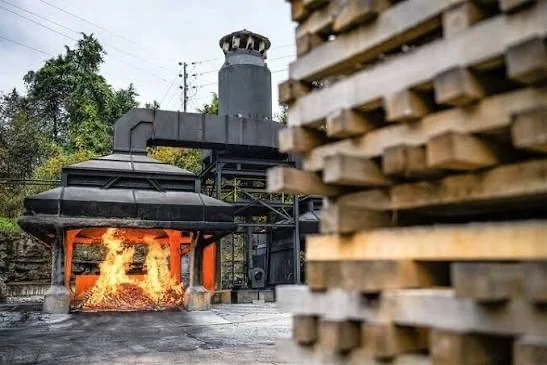
As settlers moved west, they carried rectifying techniques with them. In 1825, Alfred Eaton of Lincoln County, Tennessee, is credited with formalizing a method of filtering raw whiskey through deep vats of sugar maple charcoal before aging. But it was Nathan “Nearest” Green, a formerly enslaved distiller on the Dan Call farm, who is credited with perfecting the practice. It is commonly accepted that Green’s expertise was passed to Jack Daniel, and in time the process became synonymous with Tennessee whiskey—though its origins were anything but singular.
The Rise and Power of the American Rectifier
The occupation of rectifier evolved alongside the industry itself. By the 1830s, with the advent of Aeneas Coffey’s continuous column still, rectifiers could efficiently produce high-proof, neutral spirits in massive quantities. They bought bulk neutral alcohol, ran it through charcoal, and blended it with coloring or flavoring to mimic aged whiskey—sometimes in hours, not years. After the Civil War, federal laws pushed distillers out of retail, handing nearly all blending, bottling, and branding power to rectifiers. By the late 19th century, the majority of American whiskey was rectified. Iconic brands like Old Forester, Four Roses, and I.W. Harper began as rectifiers’ blends, built from barrels sourced across the whiskey belt.
Bottled-in-Bond: The Pushback and the End of an Era
By the 1890s, as much as 90% of American whiskey was rectified—sometimes with dubious methods. This led straight whiskey distillers, led by Colonel E.H. Taylor Jr., to champion the Bottled-in-Bond Act of 1897 and the Pure Food and Drug Act of 1906. These laws demanded transparency and purity, requiring rectified whiskey to be labeled as “blended,” and establishing straight whiskey as a protected category.
The Lincoln County Process: From Common Practice to Icon
Throughout the 19th and early 20th centuries, charcoal filtering was usually called leaching, rectifying, or simply “cleaning up” whiskey. It wasn’t until 1956 that Jack Daniel’s marketers coined the term “Lincoln County Process,” aiming to distinguish their whiskey from Kentucky bourbon and to avoid the less appetizing word “leaching.” Ironically, the famed distillery sits in Moore County, not Lincoln, due to changing county lines.
In 2013, Tennessee state law enshrined the process: to be labeled “Tennessee Whiskey,” the spirit must be filtered through sugar maple charcoal before aging (with a lone exception for Prichard’s).
Charcoal Filtering Today: The Kentucky Precedent and the Marketing of Tennessee
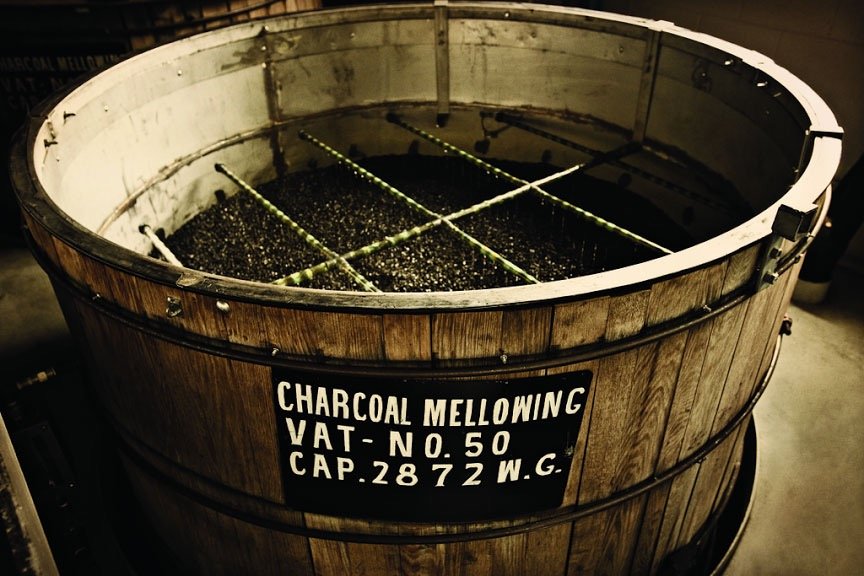
While charcoal filtering is widely celebrated as a Tennessee signature, it has deep roots in Kentucky’s own distilling heritage. Primary documents from the late 18th century preserved at Louisville’s Filson Historical Society reveal that early Kentucky distillers were leaching unaged spirit through sugar maple charcoal vats long before Tennessee codified the practice. One such document, from the Beale-Booth Family Papers, lays out in detail how these vats were constructed—with a perforated false bottom, layers of maple charcoal, gravel, and wool blankets—to refine raw whiskey before it touched a barrel or left the farm. This evidence demonstrates that charcoal leaching was a standard procedure among Kentucky’s distillers and rectifiers from the very beginning.
The practice did not fade with time. After Prohibition, Kentucky producers like Brown-Forman maintained this legacy, most notably through the Early Times brand, where pre-barrel charcoal leaching delivered a signature smoothness for generations. Today, brands such as Cooper’s Craft in Louisville continue that Kentucky process, drawing from a playbook that predates Tennessee’s marketing claims by decades.
The primary distinction between Kentucky and Tennessee comes down to marketing and federal labeling, not invention. In the 1800s, distillers in both states used pre-barrel charcoal leaching to refine spirits when long-term barrel aging was not yet the norm. It was in the 1950s that Jack Daniel’s trademarked and heavily advertised the “Lincoln County Process” to distinguish itself from Kentucky bourbon, and in 2013, Tennessee enshrined it in state law. Meanwhile, Kentucky distillers simply continued what they had always done—charcoal leaching—without needing to rebrand it for regional pride.
In essence, the process is not a modern trend nor a Tennessee import. It is a shared American tradition, with Kentucky’s role both foundational and enduring.
Filtration Methods in Practice
To understand charcoal’s ongoing role in American whiskey, it’s essential to distinguish between its two primary applications—each with its own purpose and tradition:
| Feature | Pre-Barrel Charcoal Leaching (Lincoln County Style) | Post-Barrel Charcoal / Carbon Filtration |
|---|---|---|
| When It Happens | Before aging (on unaged raw white dog) | After barrel maturation (prior to bottling) |
| Primary Goal | Strip harsh fusel oils and grain bite upfront; soften spirit | Prevent flocking (chill haze) and remove heavy wood solids/tannins |
| Mechanics | Gravity-drip through deep vats of sugar maple charcoal | Pressure-filtering through wood charcoal/carbon/chill-filtration units |
| Flavor Impact | Allows oak/vanilla to dominate earlier in aging | Polishes mouthfeel; may slightly lighten color/tannins if over-filtered |
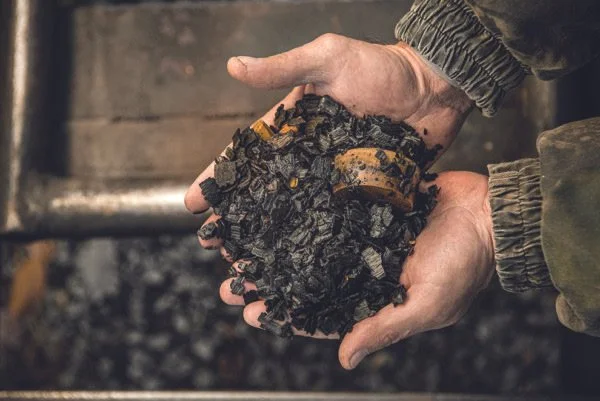
Pre-barrel (Leaching): This method, historically practiced by Kentucky distillers and carried forward by brands like Early Times and Cooper’s Craft, involves running raw, unaged whiskey through deep vats of sugar maple charcoal before the spirit ever enters a barrel. The goal is to strip away harsh fusel oils and grain bite upfront, resulting in a softer new-make that allows mature barrel flavors—vanilla, caramel, oak—to emerge during aging.
Post-barrel (Charcoal/Carbon Polishing): Used extensively across Kentucky and the broader whiskey industry, post-barrel filtration is a finishing process applied to mature whiskey before bottling. Here’s where science comes directly into play: as whiskey ages, it absorbs fatty acid esters, lipids, and tannins from the barrel. When the whiskey is diluted to bottling proof and exposed to cold (think: poured over ice, or sitting in a delivery truck in winter), these fatty acids can clump and create a cloudy phenomenon known as "flocking" or chill haze. To prevent this, distillers chill the whiskey and pass it through wood charcoal or activated carbon pads, which adsorb the haze-forming compounds. This stabilizes the whiskey for clarity and polish, without stripping away its core character.
So when the conversation turns to charcoal filtration, remember: what’s often credited as a Tennessee hallmark is, in reality, part of a much older and broader American whiskey legacy—one that reaches back to the colonial era. Kentucky and Tennessee have always run neck and neck in developing and adapting these techniques, and both states have shaped the story. Charcoal filtration is no longer just a Tennessee signature, nor solely a Kentucky tradition. Several bourbons and non-Tennessee whiskeys now employ pre-barrel filtration, mirroring the Lincoln County Process without the label. Brown-Forman’s Cooper’s Craft Bourbon in Kentucky filters its raw spirit through beech and birch charcoal before barreling. Early Times Kentucky Whisky historically did the same, producing a smoother, lighter profile. Craft distilleries from New York to Ohio are reviving 19th-century rectifying techniques with sugar maple charcoal vats.
Kentucky’s approach often comes after aging: brands like Ezra Brooks, Quality House, and entry-level bourbons from Benchmark and Old Crow use charcoal filtration as a finishing step, polishing off tannins and clarifying the whiskey just before bottling.
Ultimately, it comes down to timing and purpose:
Pre-barrel filtration (Lincoln County style) strips harshness from new-make spirit, allowing the barrel’s vanilla and caramel notes to shine during maturation.
Post-barrel filtration removes excess wood tannins and cloudiness, providing a final refinement before bottling.
The Real Legacy of Charcoal and Rectifiers
The story of charcoal filtering isn’t just a Tennessee story, or a single distiller’s invention. It belongs to ancient doctors and colonial farmers, to British gin makers and American rectifiers, to enslaved Africans and legendary names like Alfred Eaton and Nearest Green. It’s a story of adaptation, survival, and, above all, transformation—where generations of craft and knowledge turned rough spirits into the American whiskeys we celebrate today.
Raise a glass, and taste the journey—past, present, and future—in every sip.