
When folks start talking whiskey, they’re quick to tip their hats to Ireland or Scotland first. And they should, but that’s not the whole story.
See, back in the 1500s, while Scottish and Irish monks were learning their craft, German-speaking lands were busy with their own kind of alchemy. The church and the apothecary weren’t so far apart, and the monks there started tinkering with distillation, turning not only herbs but also surplus grain and fruit into a spirit that could keep you warm through a long winter. As it happened, a German physician by the name of Hieronymus Brunschwig put out a book—Liber de arte distillandi—that became one of the earliest widely printed guides on distillation. He wrote it plain as day, so anyone with a mind to could try their hand at distilling, whether for medicine or for something a little more neighborly.
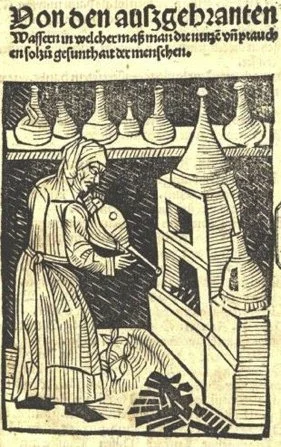
A 16th-century woodcut illustrating early German distillation practices.
By the time the 16th century rolled around, distilling in Germany had moved out of the pharmacy and onto the farm. Folks figured out that if you had a bumper crop—grain or fruit—you could ferment it, run it through a still, and keep its spirit alive long after the harvest was gone. That’s how schnapps came to be: sharp, clear, and strong enough to chase away a chill.
Historians generally agree that the still itself traces its roots back to the Near East. But the clever “worm”—that coiled copper cooling pipe every proper moonshiner swears by—came later, as European distillers refined their craft. German-speaking regions, with their strong traditions of farm distilling and copper work, were among the places where those practical improvements likely took shape.
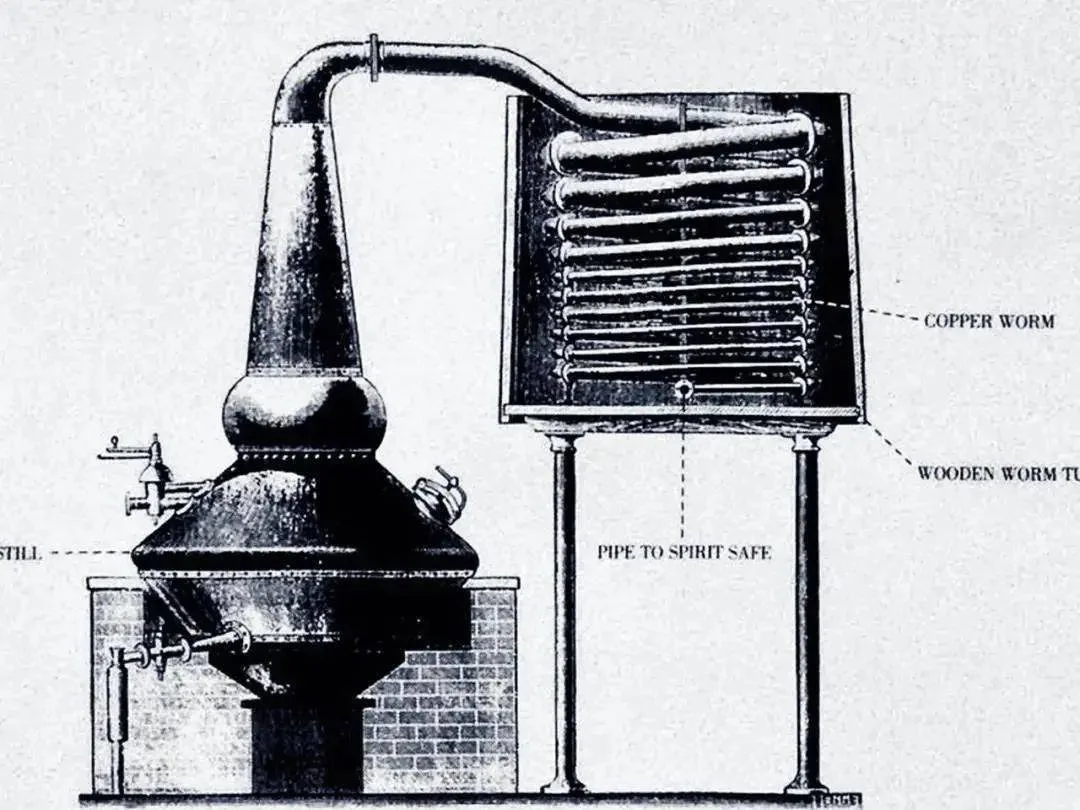
That bit of tinkering made it possible to draw out a higher-proof spirit, something with real fire in it. Rye schnapps, in particular, became a staple, and when German families packed up for America, they brought both the taste and the know-how right along with them. Rye would go on to shape American whiskey, especially up in Pennsylvania, where the climate and the grain just seemed to fit.
By the late 1700s, Pennsylvania had become the center of American rye whiskey production. Many of the distillers were German-speaking farmers whose families had settled there decades earlier. Rye thrived in the region’s rocky soil and cooler climate, and the whiskey they produced carried a bold, spicy character that reflected both the grain and the traditions those families brought with them from Europe.
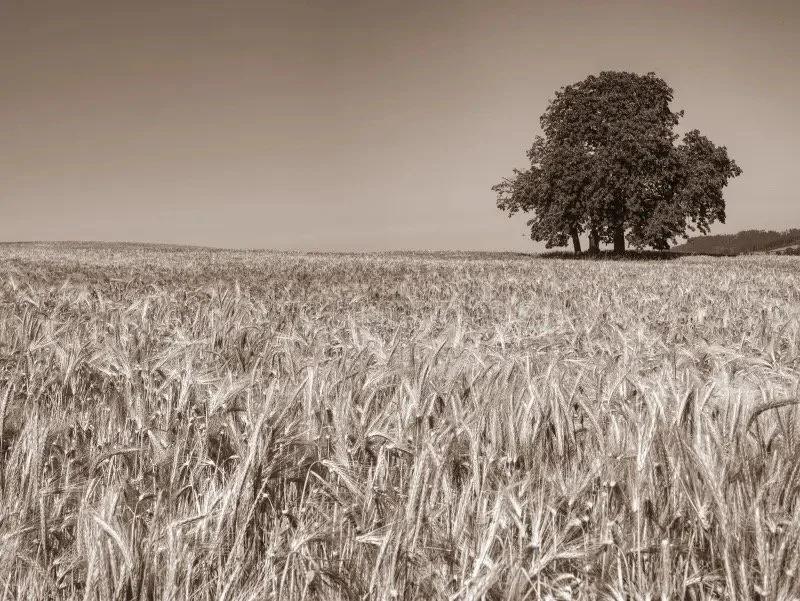
German brewing traditions also played a quiet role in shaping American whiskey. Many German settlers were brewers long before they were distillers, and they carried with them a deep understanding of fermentation. The same knowledge that helped them turn barley into beer could just as easily guide the fermentation of rye or corn mash. That familiarity with yeast, temperature, and grain handling gave German farmers an advantage when adapting to distilling in the New World. In many frontier communities, this kind of knowledge was passed down within families and households, long before it was written into the formal methods of commercial distilleries.
Northern Germany never did have much luck with grapes, so they made do with what grew best: hardy grains and tough little fruits. Up north, the drink of choice was korn —a clear, bracing spirit made from rye or wheat that became the “common man’s drink.” Down south, in the shadow of the mountains, farmers learned to coax brandies from apples, pears, cherries, and plums. Obstler, they called it. Each region had its own flavor, but the spirit of making do with what you’ve got—that’s universal.
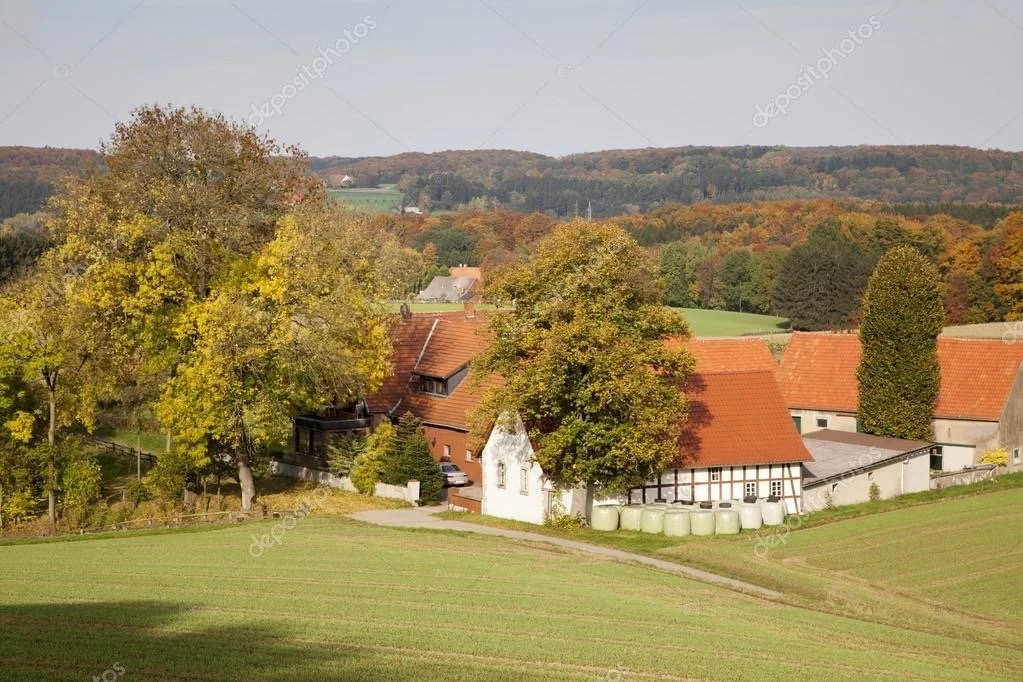
A traditional German farm, where agriculture and distilling often went hand in hand.
You’ll often hear that Dr. James C. Crow, a Scottish chemist working in Kentucky in the 1830s, is credited with developing the sour mash process. That’s true in the sense that Crow helped standardize and apply it with scientific precision at larger distilleries. But the underlying idea of souring a mash may have been far older. Farm distillers—many drawing on brewing traditions brought from Europe—were already familiar with techniques that reused portions of a previous fermentation to stabilize the next. A sour mash recipe preserved in the Catherine Spears Frye Carpenter family archives suggests that versions of this practice were circulating in Kentucky households before Crow formalized the process. Carpenter herself was born around 1760 in Virginia to German immigrant parents, George and Christina (Hardwin) Spears, a background that reflects the German fermentation traditions carried into the frontier communities where early American whiskey took shape.
I’d never take away from the Scots or the Irish, but it’s only fair to shine a light on the German influence—especially since they'd been perfecting their craft long before they set foot in the New World. When German families landed in places like Pennsylvania and Kentucky, they brought their distilling traditions with them. In those frontier communities, distilling knowledge often traveled through family networks, with marriages and partnerships linking many of the names that would later become familiar in American whiskey history. Take the Boehms—a German family name that, over time and through the quirks of American spelling, became Beam. Yes, that Beam, as in Jim Beam. Or the Wellers, who came from Maryland before heading west to Kentucky, starting farm distilleries that would become legendary names. Henry Oberholzer started what became Old Overholt, and George Dickel, a German immigrant, founded Cascade Hollow Distillery in Tennessee back in 1878.
The Scots and Irish came with a fondness for barley, but the Germans, well, they favored rye—a grain that thrived in the American soil and gave Pennsylvania whiskey its backbone. Maybe that’s part of why pure rye whiskey found a home there, shaped by hands that knew how to coax flavor from something stout and stubborn.
When the U.S. government started encouraging settlers to move west and plant corn, the Germans were quick to adapt. Corn gave more spirit to the barrel and a sweeter taste, and before long, it had overtaken rye as the main grain in American whiskey. Still, the old methods remained—careful fermentation, sour mashing, and a respect for the process that stretched back centuries.
If you look closely, that story of German distilling traditions making their way into American whiskey isn’t just something found in history books—it shows up in my own family as well. My fifth great-grandfather, Johannes Weller, distilled rye whiskey in Maryland. After the Revolutionary War—and Johannes’ passing—the family moved west, settling in Kentucky. His son, Daniel, my fourth great-grandfather, took a flatboat down the Ohio River in 1794 and established a farm near Botland in Nelson County. Like many frontier families moving west after the Revolution, the Wellers followed the river routes that connected the mid-Atlantic settlements to Kentucky’s fertile interior.
When Daniel arrived in Nelson County, he entered a region already known for its fertile farmland and growing distilling culture. Established in 1784, Nelson County had quickly become one of Kentucky’s earliest agricultural centers. The farm lay within the Rolling Fork watershed of Nelson County, a region laced with small creeks—such as Bear Creek—that provided water for early farms and distilleries. By the early 1800s, Kentucky already had thousands of small farm distilleries in operation, many clustered in central counties like Nelson, where converting surplus grain into whiskey had become a practical part of frontier agriculture. Small farm distilleries dotted the countryside, where farmers converted surplus grain—especially corn and rye—into whiskey that could be stored, traded, or shipped downriver. In frontier communities like Botland, distilling was often simply another part of farm life, much like milling grain or coopering barrels. Whiskey served not only as a drink but as a practical way to preserve the value of a harvest in a place where transporting raw grain to market could be difficult.
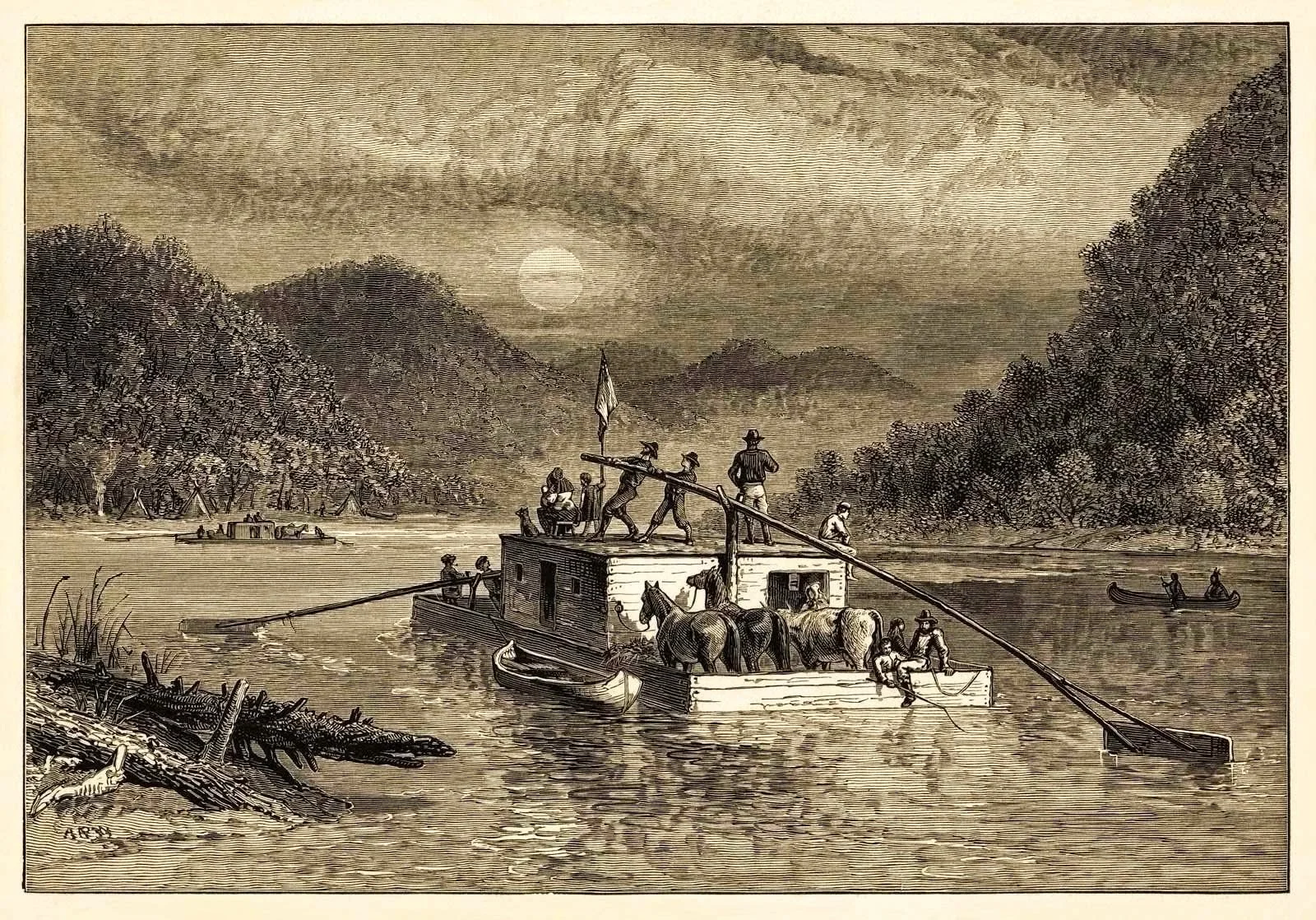
Flatboats like this carried settlers, livestock, and household goods westward, including families such as the Wellers who journeyed to Kentucky after the Revolution.
A surviving distillery license from 1800 shows Daniel leasing out his still, suggesting that distilling was already part of the working economy of his farm. When Daniel died in 1807 after a fatal accident involving a horse, his estate listed two stills, mash tubs, and the tools of the cooper’s trade.
Early Kentucky distilling families were often connected not just by trade but by marriage. In my own family, Daniel Weller had two daughters who married into the Beam family. His daughter Anna Maria “Mary” Weller married Jacob B. Beam Jr. in 1813. Several years later, another daughter, Sarah “Sally” Weller, married John Beam in 1821, as recorded in the Kentucky, U.S., Compiled Marriages, 1802–1850. These marriages took place during Kentucky’s frontier distilling era, long before the commercial bourbon industry began to take shape. In communities where farming, distilling, and family life were closely intertwined, such family ties were common. Long before the names Weller and Beam appeared on whiskey labels, the families themselves were already part of the same whiskey-making landscape.
One of his sons, Samuel Weller, father of William LaRue, bought the equipment and moved to what’s now LaRue County. Records are few, but I have little doubt Samuel kept the family tradition alive, just as he’d learned from his father. William LaRue Weller, born in 1825, later moved to Louisville and established his own whiskey business in 1849. The rest, as they say, is history. In many ways, the Weller family’s journey—from rye distilling in Maryland to farm distilling in Nelson County and eventually to commercial whiskey in Louisville—mirrors the larger path of American whiskey itself, shaped by immigrant traditions, frontier ingenuity, and generations of quiet persistence.
I thought it was a clever move when Buffalo Trace honored Daniel’s pioneering spirit with a whiskey made from Emmer wheat, but as far as I can tell, Daniel himself never made a wheat-based bourbon. That particular twist came later, thanks to William LaRue.
German distillers don’t just show up in the family tree—they’re woven into the very science of whiskey. From the physics of cooling to the design of the stills that fill our rickhouses today, their technical breakthroughs turned distilling from a mysterious art into a precise craft. It’s their legacy, too, every time you pour a dram and catch that faint, clean scent of rye or the sweet promise of corn.
So the next time you raise a glass, give a nod to the Germans, too. They don’t always get top billing in whiskey lore, but their spirit—practical, inventive, and quietly persistent—runs deep in every bottle, carried forward through generations of farmers, families, and distillers who helped shape the American whiskey we know today.
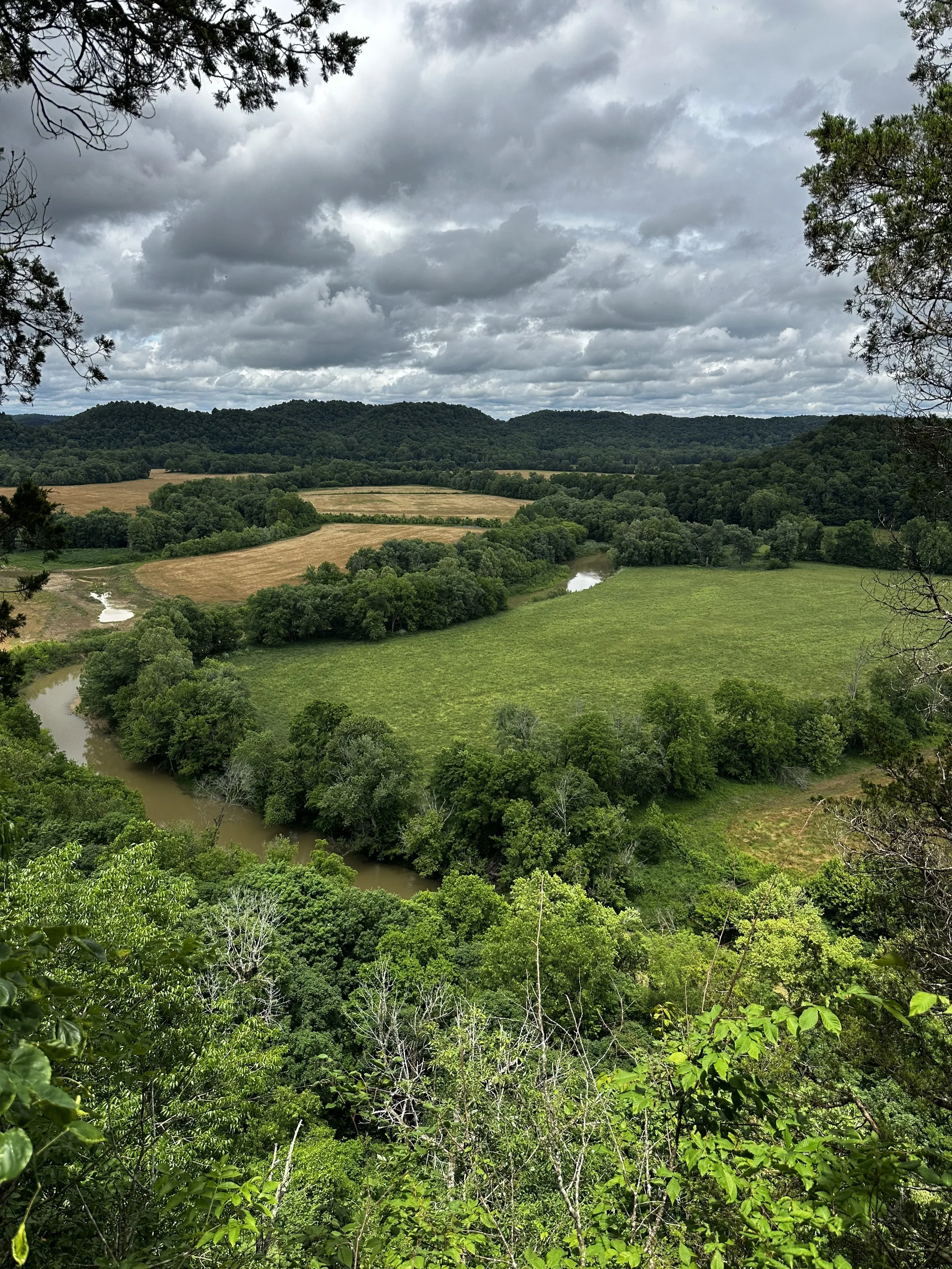
The Rolling Fork River winds through rural Nelson County, Kentucky, a landscape that supported some of the Commonwealth’s earliest farms and distilleries.
