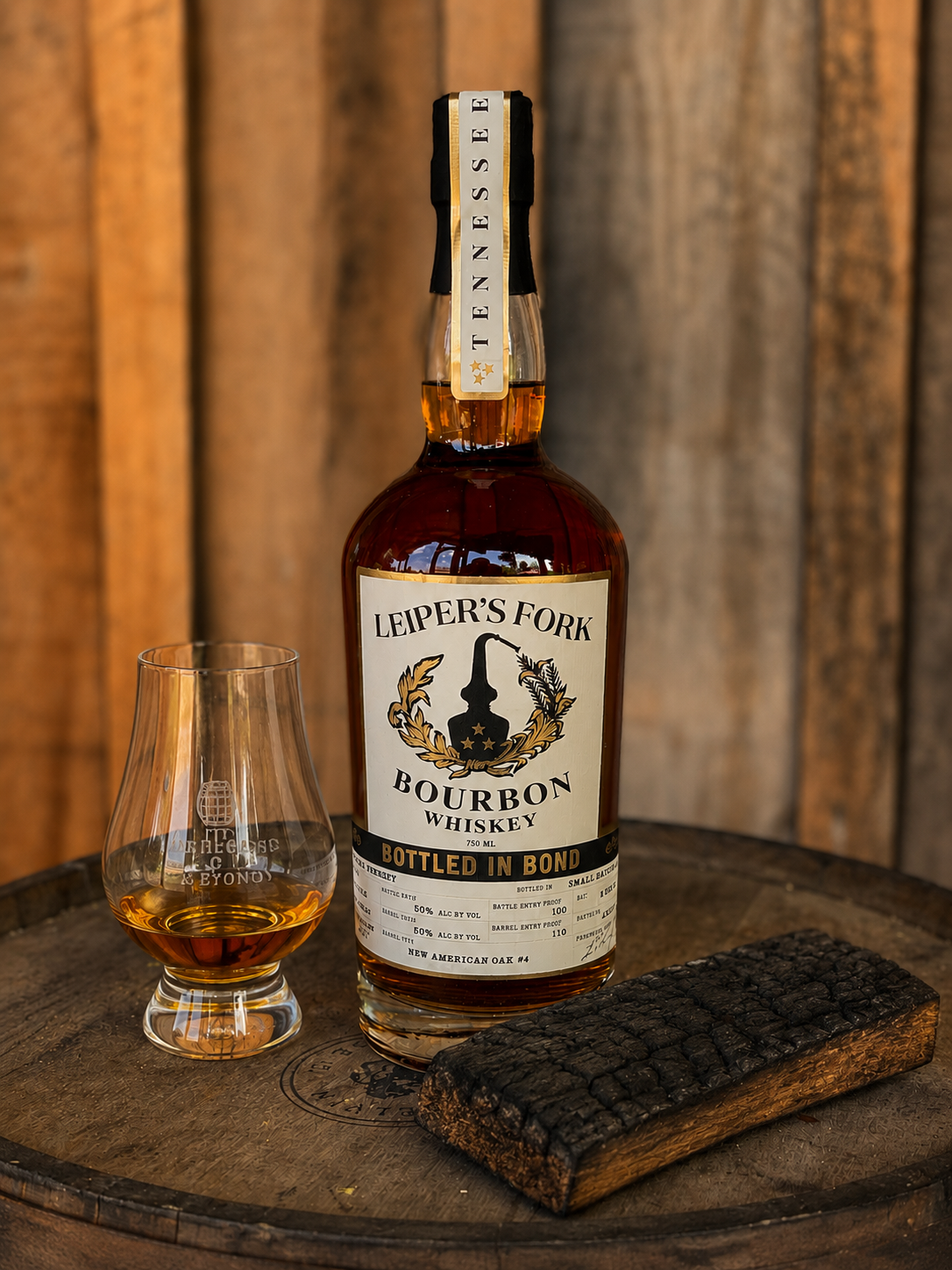
When Wood Met Whiskey
Before bourbon barrels became synonymous with flavor and heritage, they were just… barrels. Oddly enough, the earliest barrels weren’t about making whiskey taste better—they were just the ancient world’s version of Tupperware. Two thousand years ago, nobody was thinking about caramel notes or mouthfeel. They just needed something to haul stuff.
If you rewind far enough, storage started with clay pots and jars—think ancient Egypt, where wall paintings from around 2600 BC show wooden containers being used for measuring wheat and harvesting grapes. So, wood was definitely in play, but the real magic hadn’t happened yet. Over time, people figured out that wood worked better than clay for certain things: it was lighter, stronger, and less prone to shattering. Before long, wood became the go-to material for hauling everything from wine to oil to water.
But it took the Celts to really level up the container game. They didn’t invent the barrel, but they perfected it—introducing curved staves and the classic bulged middle (the “bilge”) that makes barrels a breeze to roll and stack. Early barrels were held together by wooden bands or thick grapevine ropes, and by 350 BC, Celtic barrels were already rolling across Europe.
Enter the Romans, who took one look at what the Celts were building and said, “We’ll have what they’re having.” Up until then, the Romans relied mostly on clay amphorae, but the advantages of the wooden barrel were too good to pass up. These new vessels were tougher, easier to transport, and could be stacked high in a cellar or ship’s hold. The Romans quickly adopted barrels for just about everything—wine, oil, beer, you name it—and the art of coopering spread far and wide.
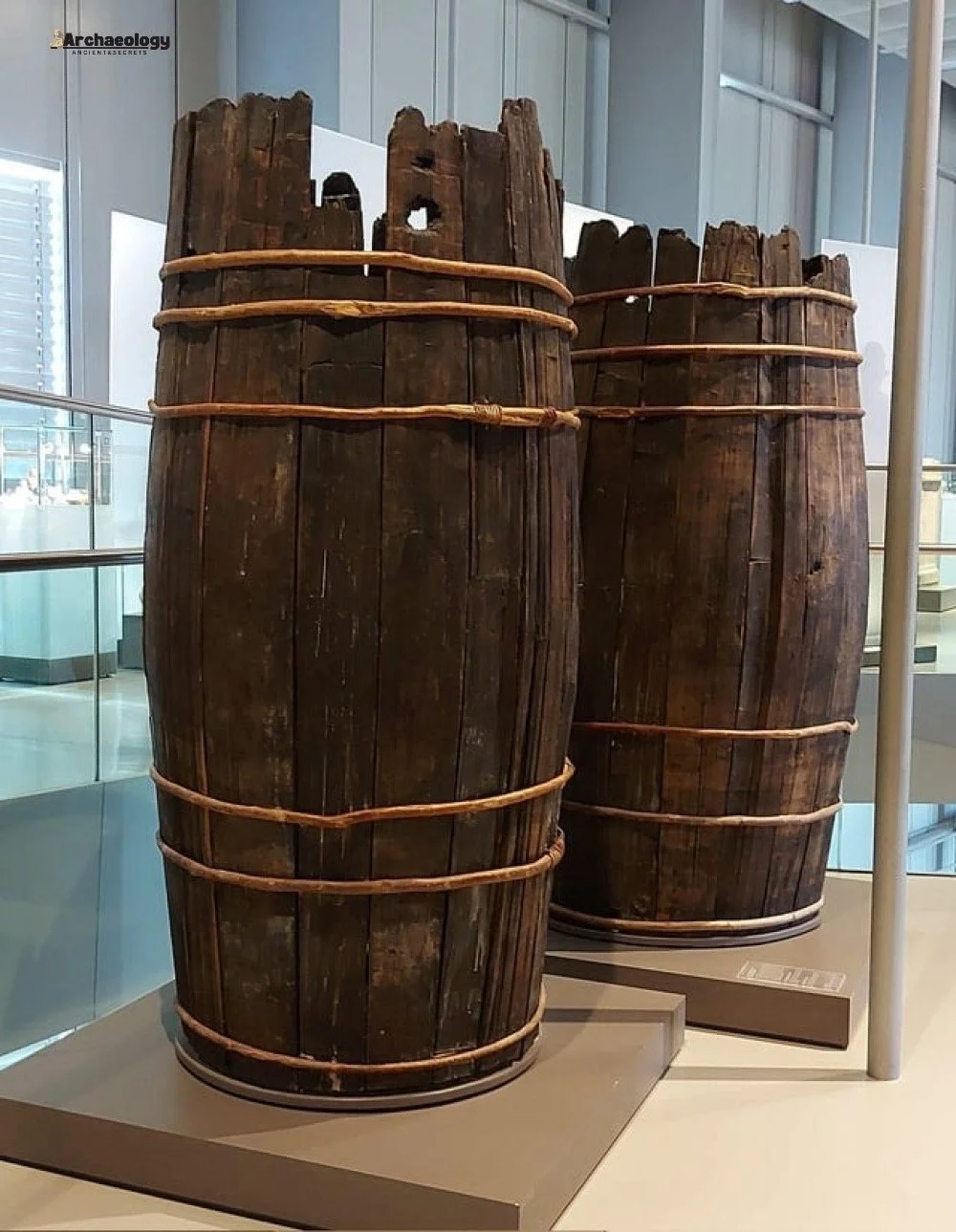
Among the oldest surviving examples of cooperage, the craft of barrel making, are wooden barrels the Romans refined for storage and transport. Constructed from oak and other durable woods, these vessels were bound tightly with wooden or metal hoops and proved far more practical than the clay amphorae they gradually replaced.
For centuries, barrels were tools of transport. Their influence on flavor was accidental. But accidents, when repeated, become discoveries.
The material of choice quickly became oak. With somewhere between 400 and 500 species worldwide (about 90 native to the US), oak wasn’t hard to find. Its density and grain made for watertight, sturdy barrels. American white oak, in particular, contains natural cellular structures called tyloses that seal the wood, making it watertight without glue. It also carries the compounds that later became synonymous with bourbon—vanilla, caramel, spice, and toasted sweetness. By the Middle Ages, barrels existed in all sorts of sizes: from a modest 42-gallon wine cask for King Richard III to massive “butts” and “pipes” (no joke) that could hold up to 130 gallons.
What blows my mind is that, while the fundamentals of coopering go way back, modern techniques have definitely put their own spin on things. Traditionally, coopers split oak logs along the grain to help keep barrels watertight, but today, saws are often used for efficiency, especially in large-scale operations. Air-drying oak is still practiced for high-end barrels, though kiln drying is now common for mass production. The rest of the process is a mix of fire, water, physics, and patience: staves are stood up inside a ring, forming what looks like a wooden flower, then heated and steamed to bend them into that classic barrel bulge. Since at least the time of the Celts, metal hoops—often iron—were used to hold everything together, though wooden bands or vine ropes made appearances in earlier, rougher designs.
By the time America was a collection of colonies, barrels (or “casks,” as they called them) were everywhere. Sizes ranged from the little 9-gallon piggin to the massive 130-gallon butt, with each size serving a particular purpose—wine, spirits, tobacco, and everything else that needed moving or storing. The most primitive “gums”—just hollowed logs—were actually a part of barrel history, borrowed from Native American tradition. They were mostly used on farms for dry goods or water, never for whiskey, since they couldn’t be made watertight enough for spirits. Gums were far cry from the craftsmanship required of a true cooper.
When whiskey-making first took off in America, nobody was obsessing over barrel science. Distillers just wanted to get their product to market, and barrels were the best transport vessels around. Most early American whiskey was shipped in whatever casks were available—usually reused barrels that had previously held wine, vinegar, or other goods. These barrels weren’t made of new oak, and they definitely weren’t charred with flavor in mind. Still, people noticed that something magical happened: the whiskey changed color, mellowed, and picked up a richer taste the longer it spent in wood.
It wasn’t until later that distillers began to catch on to just how much a barrel could shape the spirit inside. The “aha!” moment came with the realization that a new, charred white oak barrel could transform raw whiskey into something much smoother and more flavorful. In fact, put fresh whiskey in a new oak barrel, and in just six weeks it starts to take on color; up to 60% of a whiskey’s flavor and all of its color come from the barrel. If you enjoy sipping bourbon, you owe a toast to oak.
Of course, there’s a persistent bit of American folklore about Elijah Craig, often called the “Father of Bourbon.” The story goes that a barn fire accidentally charred his barrels and, unwilling to waste them, he filled them with whiskey—creating bourbon as we know it. It’s a story that has endured because it’s memorable. But history suggests something less dramatic and far more practical. Craig was one of many frontier distillers producing corn whiskey. Controlled charring likely evolved not from accident, but from necessity: fire cleaned the barrel, sealed the wood, and, over time, revealed how profoundly it could transform the spirit inside.
In the 18th century, American whiskey barrels were often smaller—typically between 32 and 42 gallons—so they could be loaded onto wagons and moved along bumpy backcountry roads and narrow waterways. By the 19th century, the 42-gallon barrel had emerged as the standard for shipping liquids, including whiskey. But during World War II, the industry made a final shift: to conserve wood and metal, and to fit rickhouse storage racks, distilleries adopted the now-iconic 53-gallon barrel, known as the American Standard Barrel (or ASB). This size struck the perfect balance between capacity, manageability, and warehouse efficiency. It was also around this time that the Federal Alcohol Administration Act of 1938 formalized the requirement that bourbon be aged in new charred oak containers (it does not say new charred oak barrel)—locking in what we know as “bourbon barrel” tradition today.
That 1938 Act locked in what makes bourbon bourbon: it must be distilled at no more than 160 proof, entered into new charred oak barrels at no more than 125 proof, and aged at least two years to be called “straight.” The Act also made it illegal to use misleading labels and required a Certificate of Label Approval (COLA) to ensure consumers received accurate information about the spirit’s identity and quality. While some distillers today are experimenting with smaller barrels, the standard remains the 53-gallon size. These strict guidelines are what define bourbon and continue to be followed by distillers today. It was a big win for the cooperages and timber industry, who now had a guaranteed market for American white oak.
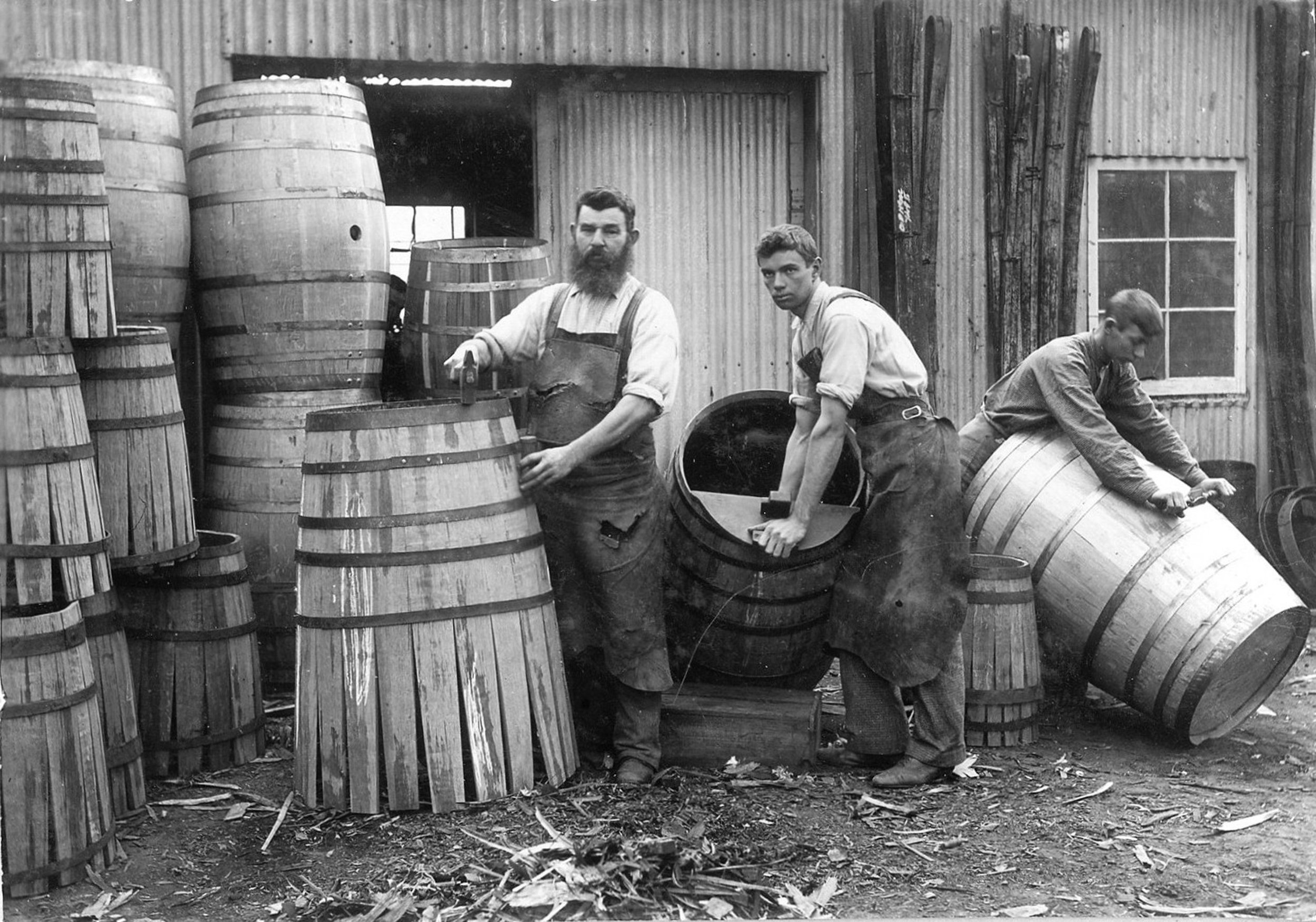
Coopering is still a craft, not a science. A 53-gallon barrel usually has 31–33 staves—too many, and there’s a risk of leaks; too few, and the barrel might warp. No glue, no nails, just fire, water, physics, and a patient hand. Each stave is carefully selected and jointed to keep the barrel watertight—essential for preserving both the whiskey and the substantial investment each barrel represents.
And what about the afterlife of these barrels? Since bourbon law demands a new barrel for every batch, hundreds of thousands of used barrels are shipped around the world every year. Scotch, Irish whiskey, rum, tequila, craft beer, even soy sauce—everyone wants a piece of that ex-bourbon magic. In Kentucky alone, you’ll find used barrels flavoring everything from barbecue sauce to maple syrup to hot sauce. It’s a second act, and in some ways, it might be just as interesting as the first.
Barrels do not hurry. They demand patience. They reward structure. They punish shortcuts. In an industry sometimes tempted by speed, the barrel remains the quiet authority in the warehouse.
Honestly, the story of the bourbon barrel is way more than just a footnote in whiskey history. It’s a tale about human ingenuity, a craft passed down through generations, and a humble container that ended up becoming an essential ingredient. The next time you lift a glass, remember: bourbon was not simply distilled. It was shaped. And much of what we call character was written long before the cork was ever pulled.