
The story of American whiskey was never built by men alone.
It was shaped by women whose names were often left out—but whose work never was.
Women didn’t just show up to the bourbon party last week. We’ve been here since grain first met copper in the American colonies—when whiskey was coaxed from harvests in Pennsylvania, Maryland, Virginia, and beyond. Long before visitor centers, tasting rooms, or wax-dipped bottles, women were present. Before Kentucky claimed it, before Tennessee refined it, before the label mattered more than the barrel, we were there in the fields, in the still yards, and in the ledgers where every bushel and barrel was counted. We inherited land and managed estates, signed the paperwork and paid the taxes, guarded mash bills, and, when the world turned upside down, stepped up to take the reins. Some of us ran the stills. Some kept the money flowing. Some held family businesses together through war, fire, and that long dry spell called Prohibition. Read the history closely, and you’ll see it plainly: women were not oddities in America’s whiskey story. We were part of its structure.
Catherine Spears Frye Carpenter
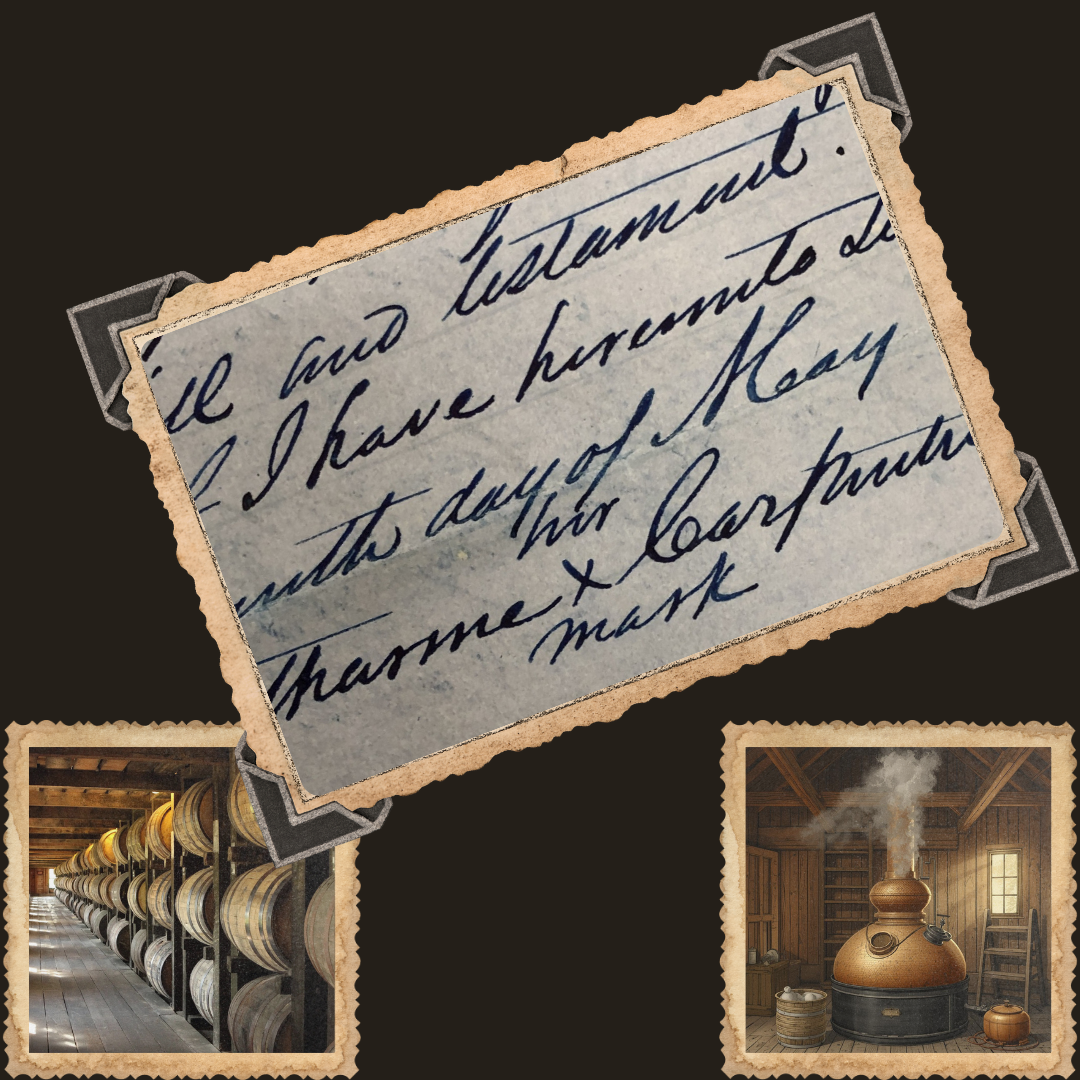
Frontier Distiller, Landowner, and Early Sour Mash Practitioner Take Catherine Spears Frye Carpenter (1760–1848), one of the earliest documented women to distill whiskey in her own right. Born in Rockingham County, Virginia, to a prosperous German-American family, Catherine was educated and skilled before migrating to Kentucky in the 1770s. Widowed at twenty-two when her first husband was killed at the Battle of Blue Licks, she later married Adam Carpenter and raised twelve children across both marriages. When Adam died in 1806, Catherine inherited a third of his estate and oversight of 667 acres in what is now Casey and Lincoln Counties. Among the Carpenter family papers, preserved at the Kentucky Historical Society, survive two handwritten whiskey recipes—one sweet mash, one sour mash. Recipes from that era are rare. Hers detail backset usage, fermentation timing, and sensory markers, predating the refinements commonly attributed to Dr. James C. Crow. After Adam’s death, Catherine expanded the family’s holdings, generating income from distilling and cattle while managing land and labor, including enslaved workers—an uncomfortable but essential part of the story. Like many Kentucky farmers, she converted surplus corn into whiskey, a commodity that traveled better than grain. Catherine Carpenter was not merely a distiller’s wife. She was a landowner, manager, and documented whiskey-maker. Her surviving recipes offer one of the clearest windows into frontier distilling—and remind us who helped shape bourbon’s earliest days.
Mary Dowling
Industrial Operator and Prohibition Strategist Mary Murphy Dowling (1858–1930) operated at a different scale entirely. Daughter of Irish immigrants, she married into the Anderson County, Kentucky distilling business and, by the 1890s, was part of an operation mashing up to 250 bushels a day with warehouse capacity exceeding 20,000 barrels. When her husband died, Mary took control. She rebuilt after a devastating fire in 1904 and became a founding stockholder in the Anderson National Bank—though she was denied a board seat. When Prohibition loomed, Mary acted decisively. She withdrew bonded whiskey before the ban and, in a bold move, relocated her distillery equipment to Juárez, Mexico, around 1926. Under the supervision of Joseph L. Beam, Kentucky methods continued just south of the border. After repeal, Beam returned to Kentucky and became instrumental in founding Heaven Hill. Some called her mysterious. The record shows something steadier: a strategic operator who navigated fire, federal law, and international relocation without surrendering her business.
Louisa Nelson
Stewardship in a Drying State When Charles Nelson died in 1891, Nelson’s Greenbrier Distillery in Tennessee was producing nearly 380,000 gallons annually. Louisa Nelson assumed leadership just as Tennessee’s legal climate tightened around alcohol. Robertson County whiskey was so significant it warranted separate federal reporting. Louisa maintained production while adapting to Tennessee’s Four-Mile Law, relying on wholesale and mail-order distribution to sustain revenue. When statewide Prohibition arrived in 1909, she ceased distilling but preserved the corporation and real estate, safeguarding the brand’s future. As a widow operating as a feme sole, Louisa exercised full contractual authority. Her legacy is not novelty—it is disciplined stewardship at industrial scale.
Margaret “Margie” Mattingly Samuels
The Maker of Maker’s Mark Margie Samuels did not stand behind her husband—she stood beside him. A University of Louisville chemistry graduate, she helped shape the recipe for Maker’s Mark, famously testing secondary grains before settling on red winter wheat for its softer character. More importantly, Margie built the brand. She named Maker’s Mark, designed the S IV seal, created the red wax top in her own kitchen, chose the square bottle, and developed the parchment-style label. Inspired by 19th-century cognac packaging, she understood presentation before “branding” became a discipline. She also recognized bourbon’s experiential potential. By restoring the Loretto distillery buildings, she helped make Maker’s Mark one of the first bourbon tourism destinations. In 1980, it became the first distillery designated a National Historic Landmark. In 2014, Margie became the first woman from inside a distillery inducted into the Kentucky Distillers’ Hall of Fame. She did not simply help make a bourbon. She shaped how bourbon presented itself to the world.
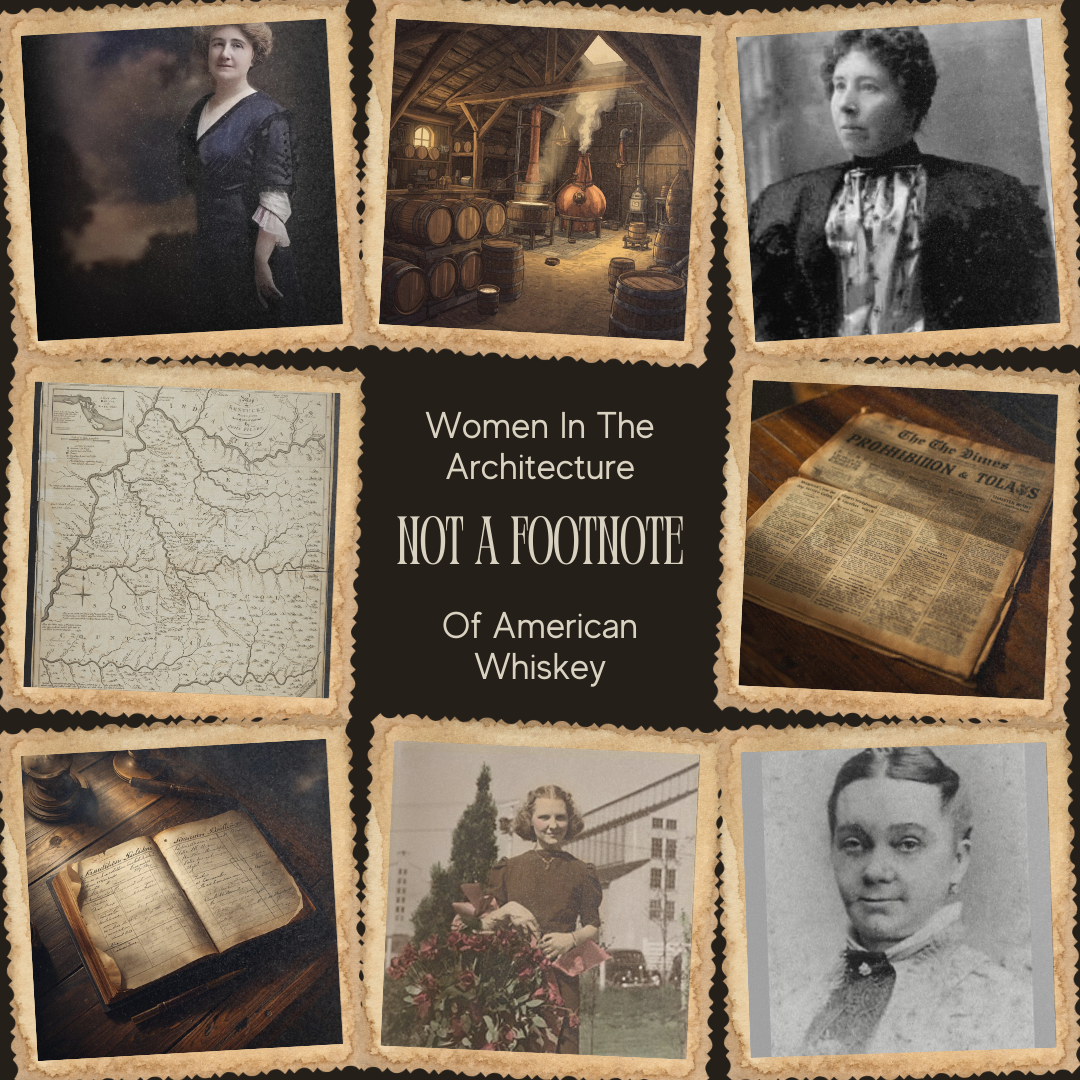
Of course, this list is far from complete. Across the bourbon and American whiskey landscape today, many women are leaving their mark—as distillers, blenders, historians, brand builders, educators, and entrepreneurs. Some lead major distilleries, others shape the industry through hospitality, scholarship, and advocacy. Their names may not all appear here, but their influence continues to expand the legacy of American whiskey in ways that future historians will no doubt record.
The Real Story
You cannot tell the story of American whiskey without the women who owned the land, wrote the recipes, managed the labor, kept the books, protected the barrel, and carried brands through crisis.
We have always been here—steady, capable, and often underestimated.
The records are there for anyone willing to look closely enough.
And we are not a footnote. We are part of the foundation.
From The Same Table
Sources & Further Reading
Crowgey, Henry G. Kentucky Bourbon: The Early Years of Whiskeymaking. Lexington: University Press of Kentucky, 1971.
Minnick, Fred. Whiskey Women: The Untold Story of How Women Saved Bourbon, Scotch, and Irish Whiskey. Lincoln: Potomac Books, 2013.
Risen, Clay. American Whiskey, Bourbon & Rye: A Guide to the Nation’s Favorite Spirit. New York: Sterling Publishing, 2013.
Faragher, John Mack. Women and Men on the Overland Trail. New Haven: Yale University Press, 1979.
Kentucky Historical Society. Carpenter Family Papers, including whiskey recipes attributed to Catherine Spears Frye Carpenter.
Kentucky, U.S., Compiled Marriages, 1802–1850.
Nelson County, Kentucky, court and probate records relating to early distilling operations.
Tennessee State Library and Archives. Historical records related to Louisa Nelson and early Tennessee distilling activity.
Books Written By Women in the Industry
Barrel Strength Bourbon: The Explosive Growth of America’s Whiskey by Carla Carlton
Bourbon Is My Comfort Food: The Bourbon Women's Guide to Fantastic Cocktails at Home by Heather Wibbels
The Bourbon Tasting Notebook by Susan Reigler and Michael Veach
Kentucky Bourbon Country: The Essential Travel Guide by Susan Reigler
The Kentucky Bourbon Cocktail Book (also More Kentucky Bourbon Cocktails) by Joy Perrine and Susan Reigler
Which Fork Do I Use with My Bourbon? by: Setting the Table for Tastings, Food Pairings, Dinners, and Cocktail Parties by Peggy Noe Stevens and Susan Reigler
Whiskey Distilled: A Populist Guide to the Water of Life by Heather Greene
Note: The following books were originally compiled from a curated list by Bourbon Women. While other titles certainly exist, these are works I have personally read and feel comfortable recommending for those interested in learning more from the women who have written about whiskey.
