
This isn’t just a distillery story.
It’s what happens when whiskey is shaped by where it goes.
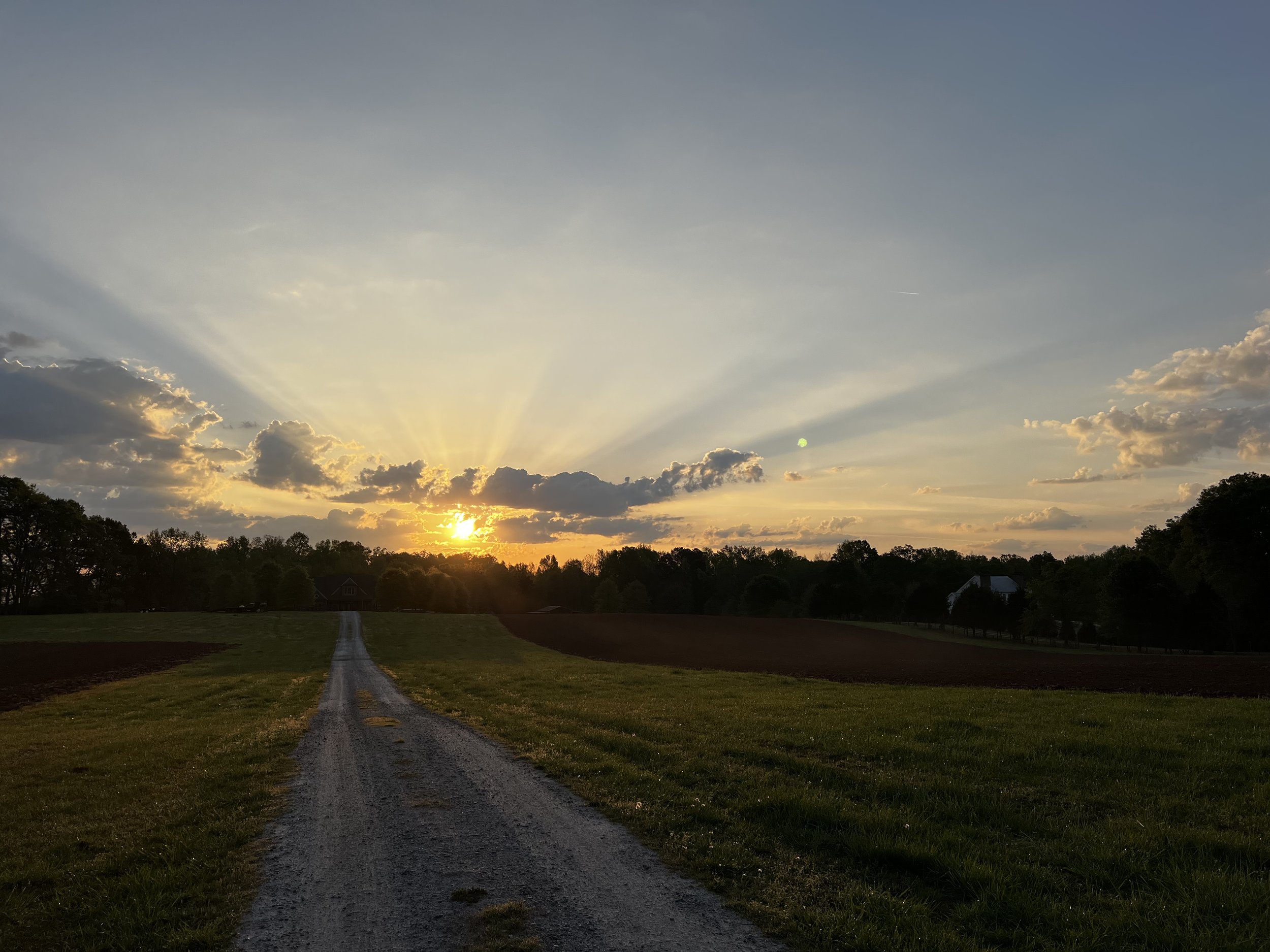
All imaages provided by Doc Brown Farm & Distillers
This interview explores how Paige Dockweiler and Amy Brown of Doc Brown Farm & Distillers are shaping a new agricultural approach to American whiskey through farm-grown grain, terroir, and artisan distilling.
As I sit down to write this piece, a few recent memories come to mind as I sip a glass of Effie Jewel Texas Limited Edition, Batch #2, named for Amy’s aunt. The spirit is savory with hints of spice and the sweetness of corn, yet still offers salted caramel, vanilla, and a dried cherry that linger gently on the palate.
When I first saw the name Doc Brown Spirits while scrolling social media, it caught my attention immediately. Growing up in Kentucky, I wondered if it might somehow connect to Dock Brown, the infamous outlaw from Grayson County in the 1840s. At the time, it was only a passing curiosity, and I did not look into it further.
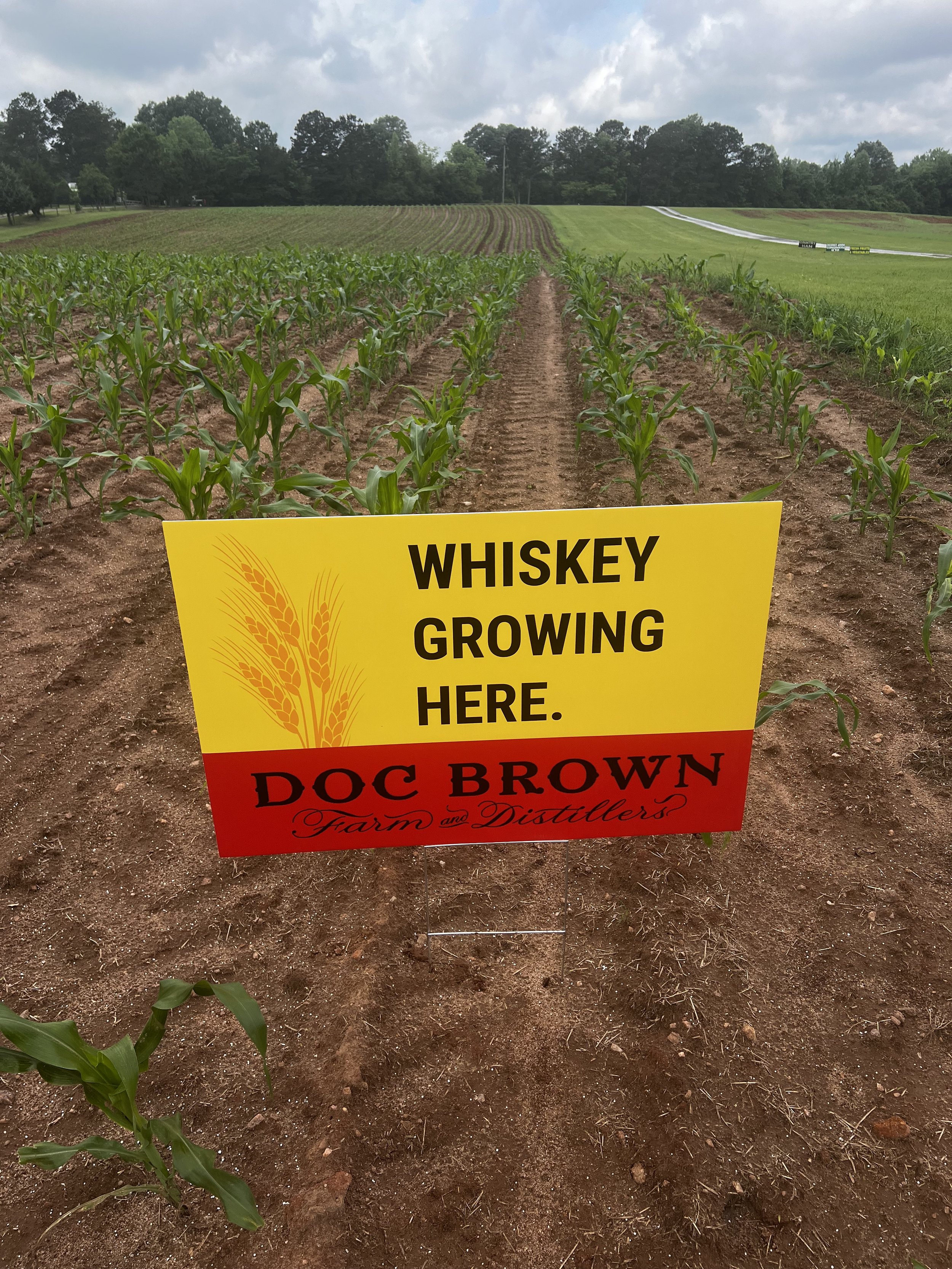
On this farm, whiskey doesn’t start in the still—it starts in the soil.
Then I heard the name again while listening to my friend Michael “Big Chief” Hiatt on The Whiskey Trip Podcast. This time, the story behind the name unfolded, and it had nothing to do with the outlaw. Instead, it introduced me to two remarkable women: Paige Dockweiler and Amy Brown.
What struck me most was that Paige and Amy did not enter whiskey chasing a quick opportunity. They came to it as farmers, people who understand the land and the patience required to work with it well. That perspective shapes everything they do. Good whiskey, like good farming, requires stewardship, patience, and respect for the ground beneath your feet.
After hearing their story, I reached out and asked if they would be willing to explore their journey more deeply through a blog interview. Graciously, they agreed.
I began gathering my questions, far more than could reasonably fit into one article, and eventually narrowed them to a core group that would guide the conversation. Even then, each answer seemed to open the door to another question.
When we finally met over Zoom, I felt an immediate sense of familiarity. Paige and Amy both grew up on farms in Georgia, while I grew up on a farm in Kentucky. Anyone raised that way understands the bond it creates with the land. Farming is rarely easy, but it is deeply rewarding. Like making bourbon, it requires patience, knowledge of the soil, faith in the process, and a fair amount of wait and see.
Our conversation moved naturally between farming, whiskey, and the philosophy of stewardship, and how working alongside nature teaches you to appreciate both the challenges and the small joys that come with the process.
In the early 2000s, when small distilleries began appearing across the country, the word craft was commonly used to describe producers working on a much smaller scale than the major distilleries. Over time, that meaning grew less precise as larger producers began using the term for limited releases or smaller batching within inventories that far exceeded what most small distilleries were producing in the first place.
Speaking with Paige and Amy, it became clear that what they are doing reaches beyond that modern use of the word. Their work feels closer to artisan distilling: whiskey shaped by farmers, land stewardship, and a deep understanding of where the ingredients come from. Their story is a reminder that bourbon begins long before the barrel is filled. It begins in the soil. It also invites a deeper question about how bourbon fits into the way we live with it—something I explore further in How Should Bourbon Exist in a Life Well Lived.
This interview with Paige Dockweiler and Amy Brown of Doc Brown Farm & Distillers explores how farm-grown grain, terroir, and agricultural stewardship are shaping a more intentional future for American whiskey.
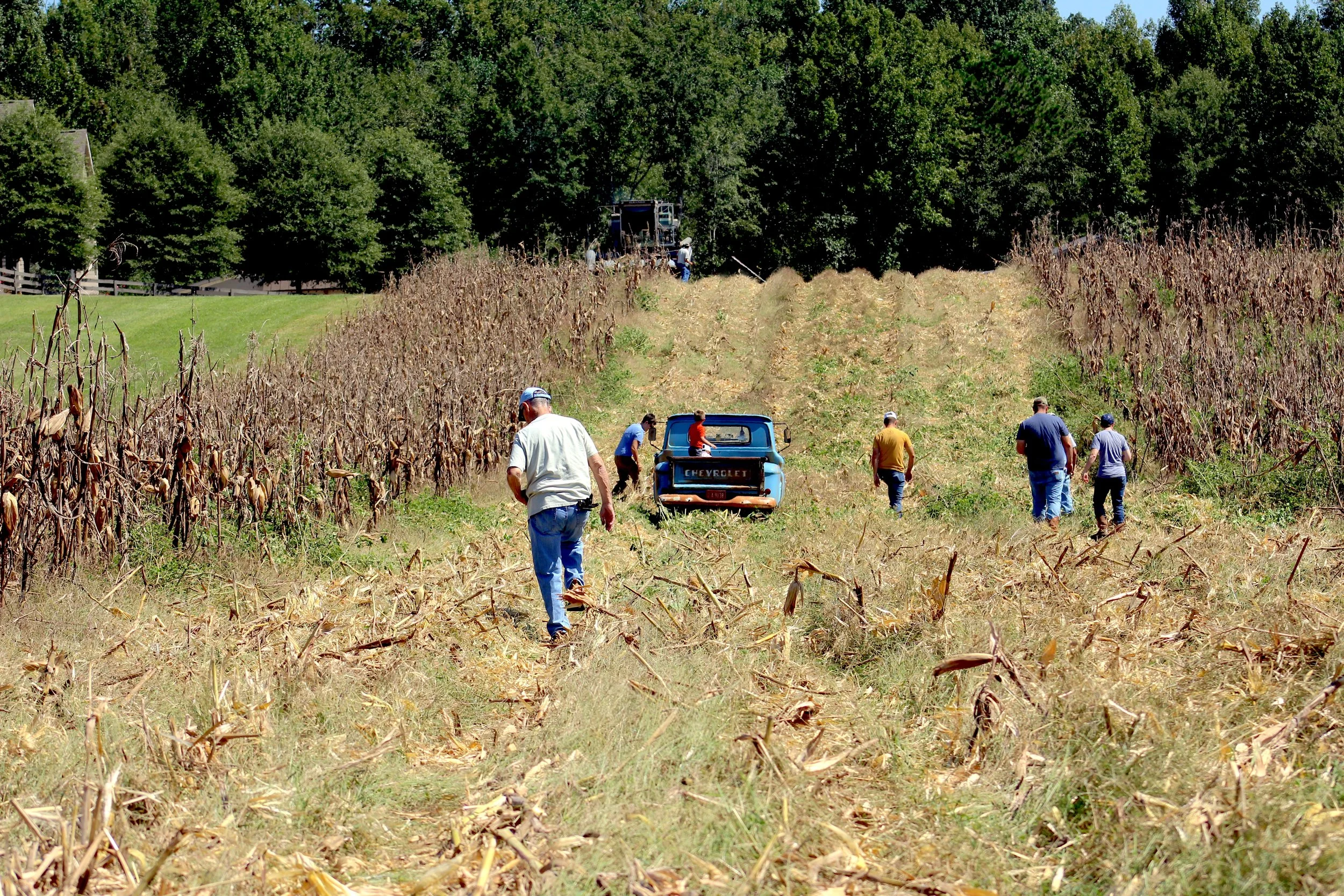
Walking the fields where the story begins—long before the barrel is filled.
Rooted in the Land
For Paige Dockweiler and Amy Brown, the story of Doc Brown Farm & Distillers begins not in the stillhouse but in the fields, shaped by their early experiences growing up on farms in Georgia.
BB: Both of you grew up on farms in Georgia. How did those early experiences with agriculture shape the vision behind Doc Brown Farm & Distillers?
DB: When you grow up on a farm in Georgia as we both did, you learn early that dirt isn’t just dirt. It’s responsibility. It’s Stewardship.
We both were taught to care for the land, respect the seasons, and understand that what you plant today might take months or years before you see the reward.
That way of thinking shaped everything we do.
Doc Brown Farm & Distillers was really born out of that mindset. We didn’t want to just make bourbon….we wanted to grow it. From the seed in the field all the way to the sip in the glass.
Because when you’ve walked those rows as a kid, watched crops come up out of the ground, and seen how hard farmers work to do things the right way… you realize the story of great whiskey really begins in the dirt.
BB: What was the moment when the idea shifted from farming to distilling?
DB: The spark actually came from a magazine.
Every year our family takes a beach trip, and part of that tradition is slowing down—watching the kids play in the sand, sitting under an umbrella, and flipping through magazines we normally wouldn’t have time for.
This was back in 2018, and one of the magazines someone had brought along was Garden & Gun. In that issue there was an article about Jimmy Red corn and how well it distilled into whiskey.
Now, the farm we had just purchased was in Georgia’s Conservation Use program, which means the land needs to stay in agriculture. So we needed to grow something.
We looked at each other and thought, “Well… why not try Jimmy Red corn?”
At the time, there was no big business plan. Honestly, the idea was pretty simple. We thought maybe we’d grow the corn, make a barrel or two of whiskey, and keep it for ourselves… maybe give a few bottles away for special occasions.
But once we harvested that corn and saw how beautifully it distilled…and then tasted the difference that grain made in the whiskey….that was the moment everything shifted.
We realized the real story wasn’t just making bourbon.
The story was growing it.
And that’s when farming and distilling stopped being two separate ideas and became the same journey.
BB: The name Doc Brown Farm & Distillers has a wonderful sense of story to it. What’s the history behind the name?
DB: The name actually comes straight out of our family.
My partner Paige’s last name is Dockweiler, and somewhere along the way people started shortening that to “Doc.” Now it’s just what everyone calls her. The grandkids even call her “Doc Doc,” which makes it even better.
My last name is Brown.
So when we bought the farm, Paige looked at me one day and said, “Well I guess this makes it Doc Brown Farm.”
It stuck immediately. It had a little personality to it, a little story behind it, and it felt like us.
When we later started distilling bourbon, it just made sense to carry the name forward. Because the distillery really grew out of the farm.
So the name isn’t something we dreamed up in a branding meeting. It came from family… and like most good things in the South, it started with a nickname that just wouldn’t go away.
From Soil to Spirit: Terroir and Farm-Grown Grain
For Paige Dockweiler and Amy Brown, the character of their whiskey begins long before the still. The grain, the soil, and the agricultural traditions of their Georgia farm all play a role in shaping the spirit that eventually reaches the glass.
BB: Your approach seems deeply tied to the land. How important is terroir to the spirits you’re creating?
DB: That’s a great question, and honestly, I think the whiskey world has been a little slow catching up on this.
The wine industry figured out terroir a long time ago. They understand that where something grows matters….the soil, the climate, the rainfall, even the slope of the land. All of that shows up in the glass.
In whiskey, we’ve historically talked a lot about the distilling process, the barrels, and aging, which are obviously important. I’m not taking anything away from that. But the conversation hasn’t focused enough on the grain and the farms (terroir).
Here’s the reality: we can grow our grains right here on our farm in the Piedmont region of Georgia, and another farmer could grow the exact same grain in Kentucky, Tennessee, or North Carolina…..and those grains will have noticeably different flavor profiles.
The soil is different. The mineral content is different. The weather patterns are different.
So when we talk about seed-to-sip, terroir is a huge part of that. We want the character of our land (farm) to show up in the whiskey. Because at the end of the day, bourbon doesn’t start in a barrel…
It starts in the dirt.
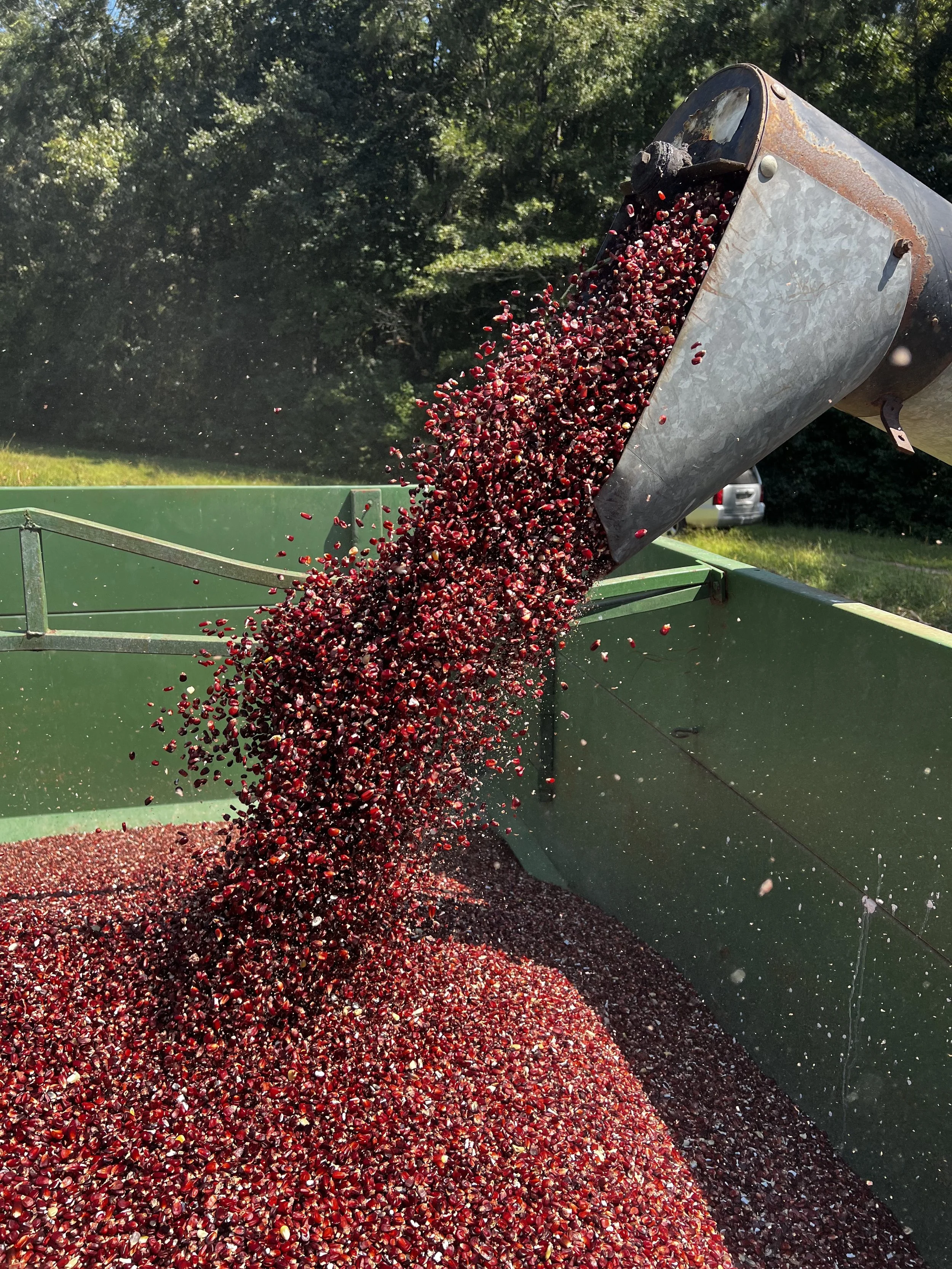
Jimmy Red corn at harvest, a heritage grain that brings depth, oil, and character to the whiskey.
BB: Do you grow much of the grain used in your whiskey, and what varieties are you cultivating on the farm? How do Georgia’s soils and climate shape those grains?
DB: Right now, we grow two primary grains on the farm: Jimmy Red corn and Abruzzi rye.
Jimmy Red corn has a fascinating history. It’s a heritage corn that was once widely grown throughout the South but nearly disappeared over time. What makes it special for whiskey is the depth of flavor it brings….richer, a little nuttier, and with a natural sweetness that really shows up in the final spirit.
We also grow Abruzzi rye, which is another grain with deep agricultural roots. That grain came to the University of GA from Abruzzo Italy in the 1950’s. It’s a hardy rye that does very well in our region, and it brings that beautiful spice and structure you want in a good whiskey.
Because we grow these grains ourselves in the Piedmont region of Georgia, the soil and climate play a huge role in shaping how they develop.
The Piedmont soils are typically red clay loams with a good mineral base, and that soil holds heat and moisture in a way that really supports grain crops. Our growing season is long, and the climate gives us a unique rhythm….cooler winters that allow the rye to establish itself, followed by hot, humid summers that push the corn to maturity.
That combination of mineral-rich soil, seasonal rainfall, and long warm days influences the way the grain develops starches and sugars, which ultimately impacts the flavor that carries through into the whiskey.
BB: Jimmy Red corn is a non-GMO heritage variety known for its higher oil content and distinctive flavor. What led you to select Jimmy Red over other heritage varieties such as Bloody Butcher or Cherokee White? And since higher-starch corns can often produce greater alcohol yields, what made the flavor and character of Jimmy Red worth that trade-off?
DB: Jimmy Red really stood out to us early on because of its oil content and the depth of flavor it brings to the spirit.
Many commodity corns, and even some heritage varieties, are bred primarily for starch and efficiency because that translates into higher alcohol yield during distillation. From a purely production standpoint, that makes sense….more starch typically means more fermentable sugar and more spirit per bushel.
But Jimmy Red is a little different.
It carries a naturally higher oil content in the kernel, and those oils contribute significantly to flavor and mouthfeel in the final whiskey. When you distill with Jimmy Red, you tend to see richer texture, deeper corn sweetness, and a more layered flavor profile that really stands out in the glass. The legs on the glass of a Jimmy Red Corn bourbon is stunning.
For us, that flavor was the deciding factor.
We did look at other heritage corns like Bloody Butcher and other NGM White, which both have fascinating histories and strong agricultural roots. But Jimmy Red had already shown a remarkable ability to translate its character into whiskey, and when we tasted spirits made from it, the difference was noticeable.
At the end of the day, we’re farmers first. When you grow the grain FOR yourself, you start thinking less about maximum yield and more about the quality of what that grain produces.
Yes, some higher-starch varieties might give you more alcohol per bushel. But our goal is to create whiskey with real character….something distinctive that reflects both the grain and the land it came from….and for us, Jimmy Red makes that trade-off worthwhile.
It may not always be the most efficient corn on paper, (I would have denied this business plan as a banker) but in terms of flavor, texture, and personality in the final spirit, it delivers something special that we are very proud of.
BB: You’ve chosen to grow Abruzzi rye on the farm. What led you to select this particular variety, and were there specific characteristics you felt would make a meaningful difference in the flavor of your spirits?
DB: We chose Abruzzi rye for a few reasons. Its history in Georgia, how well it grows in our climate, and the character it brings to the whiskey.
Abruzzi rye actually has a long agricultural connection to our region. It was introduced to the University of Georgia in the 1950s and quickly became popular with farmers throughout the Southeast because of how well it adapted to our soils and climate. For decades it was widely planted as a winter grain and cover crop across Georgia farms.
So in many ways, growing Abruzzi rye here in the Piedmont feels like bringing a piece of that agricultural history back into the field.
From a farming standpoint, it fits our growing cycle beautifully. Our cooler winters allow the rye to establish itself, and then our warm, wet springs help it grow quickly before harvest. The red clay soils of the Piedmont hold moisture and nutrients in a way that really supports that kind of winter grain.
But beyond the farming side, we were also thinking about flavor.
Abruzzi rye brings a classic rye spice to the whiskey, but it also carries a slightly earthy, grain-forward character that adds depth and structure to the spirit. When you pair that with the richness and sweetness of Jimmy Red corn, it creates a really balanced whiskey.
So, for us, the choice was both practical and intentional. It’s a grain that belongs in this region, grows well in our soil, and contributes a flavor profile that complements the corn beautifully. In a lot of ways, it helps us tell the agricultural story of Georgia through the whiskey.
BB: Are you currently growing wheat for your mash bill, and if not, how are you approaching that part of the grain bill?
DB: Currently, we’re not growing our wheat or barley. With the rotation schedule required for our Jimmy Red corn and Abruzzi rye, it simply doesn’t fit into our planting cycle right now. Thankfully, we’re surrounded by some incredible farmers who grow those grains beautifully, and we’re grateful to work with them.
BB: Are there particular characteristics from your farm that you believe show up in the final spirit?
DB: Absolutely. We believe the farm shows up in the spirit in more ways than people might initially realize.
When you grow the grain yourself, you come to understand that everything on the farm is connected. The health of the soil, the pollinators moving through the fields, the bats that help control insects at night, the balance of the ecosystem around the crops….all of it plays a role in how those grains develop.
We work hard to care for the land in a way that allows that balance to thrive. Healthy soil produces healthier grain, and healthier grain ultimately produces better whiskey.
But beyond the science of farming, there’s also a very human side to it. When you’re walking the fields through the season, watching those crops come up out of the ground, you develop a real respect for the responsibility that comes with stewarding that land. There’s a lot of care, a lot of hope, and yes, a few quiet prayers along the way as those crops grow.
Because in the end, we know we’re not fully in control….we’re working alongside the land and the seasons.
Our farm sits in the Piedmont region of Georgia with its red clay soils, long growing season, and those hot, humid Southern summers that really shape how the corn and rye mature. All of that influences the character of the grain, which ultimately carries through the distillation process.
So when someone pours a glass of our whiskey, we believe they’re tasting more than just grain and barrel.
They’re tasting the land… and the care that went into it.
BB: Many distillers talk about “grain to glass,” but relatively few actually farm their own ingredients. What has the experience of being both farmers and distillers taught you about the whiskey-making process?
DB: You hear the phrase “grain to glass” a lot in the craft spirits world, and it’s an important idea because it recognizes that the grain matters. We are grateful that the spotlight is turned back to the farming families.
But when you’re actually the ones farming the grain, you realize the story really begins even earlier than that.
It begins in the soil.
When you’re preparing the fields, planting the seed, and walking those rows through the growing season, you quickly learn that you’re not nearly as in control as you might think. Farming has a way of teaching humility. You can care for the soil, rotate crops, encourage pollinators, do everything you know to do….but in the end you’re still working alongside the weather, the seasons, and the land itself.
That mindset carries straight into distilling.
When we harvest the grain, mill it, ferment it, and distill it into spirit, there’s a moment when we fill a barrel and roll it into the barrel house. In many ways, that moment feels a lot like planting a seed in the ground.
You’ve done the work. You’ve cared for the land. You’ve made the best spirit you know how to make.
And then you wait.
Just like farming, aging whiskey requires patience and faith that the time, the wood, and the environment will do their part. You hope that years down the road what comes out of that barrel will reflect all the care that went into it from the very beginning.
So being both farmers and distillers has taught us something pretty simple: what you put into the land, and into the process, is what you ultimately get back in the glass.
And along the way you learn something else too…..this land isn’t really ours.
We’re simply caretakers for a time.
In farming, you plant a seed and hope for a good harvest. In whiskey, you fill a barrel and hope for the same thing...
BB: Earlier, you mentioned that you currently grow Jimmy Red corn and Abruzzi rye on your farm, while sourcing other grains such as wheat and malted barley. How do you decide which grains make sense to grow yourselves and which are better sourced from other producers?
DB: We try to grow as much of our grain as makes sense for both the land and the final spirit, which is why we focus our fields primarily on Jimmy Red corn and Abruzzi rye.
But farming also teaches you to respect what grows well in your region and what doesn’t.
Not far down the road from us is a small brewery run by friends of ours who started out growing their own barley. Watching their experience was actually very educational for us.
Seeing the amount of work, cost, and risk involved made us step back and ask an important question: where can our land and energy make the biggest difference?
For us, that answer was clear. Our soils and climate are well suited for growing Jimmy Red corn and Abruzzi rye, and those grains have a direct and meaningful impact on the flavor of our whiskey.
So, we focus on growing those well and working with other excellent farmers and maltsters for the barley. It allows us to stay true to the farming side of what we do while also making sure every ingredient in the mash bill meets the quality we’re looking for.
BB: Do you ever plan to grow 100% of your own grain?
DB: No, not at this time.
BB: Malting barley is a specialized process, and many distilleries rely on established malting houses rather than producing malt themselves. Historically, however, barley was grown throughout the Southeast, including Georgia, Tennessee, and Kentucky. Do you ever see yourselves experimenting with growing barley on your farm—either to malt yourselves or to send to a malting house? If so, would you be more inclined to work with a six-row variety such as Thoroughbred or a two-row variety like Avalon or Violetta?
DB: We’ve definitely talked about it…and then talked ourselves out of it…(LOL)
Historically, barley was grown throughout much of the Southeast, including Georgia, so it’s not out of the question from an agricultural standpoint. But the real challenge for us isn’t just growing the barley….it’s the malting.
Malting is a very specialized process, and right now Georgia doesn’t have a commercial malting house. That means if we grew barley we would either have to invest in malting infrastructure ourselves or ship it out of state to be malted, which adds complexity and cost. As mentioned previously, we have friends down the road who run a small brewery that began by growing their own barley, and watching their experience was incredibly educational for us. Barley can be a tricky crop in our climate, and once you add the malting piece into the equation, it becomes a much bigger undertaking than most people realize.
So for now we’ve chosen to focus our farming efforts on the grains that thrive naturally on our land…Jimmy Red corn and Abruzzi rye…and source high-quality malted barley from established maltsters who specialize in that craft.
That said, farmers are naturally curious people. If the right opportunity came along…especially if a regional malting house developed…we’d certainly be open to experimenting with barley.
If we ever did go down that path, we’d likely start by exploring six-row varieties that historically performed well in the Southeast. But like everything we do on the farm, we’d want to see how the grain responds to our soil, climate, and growing conditions before making any long-term commitments.
At the end of the day, the goal would be the same: grow what truly belongs on the land and contributes something meaningful to the spirit.
BB: Do you see a future where more American whiskey distilleries move toward a truly agricultural model like this?
DB: That’s a great question, and I do think we’re going to move in that direction, although it will probably happen slowly.
For a long time, the whiskey industry focused primarily on the distiller, the distillation techniques and barrel aging, which are obviously very very important. But more people are beginning to realize that the grain itself matters just as much, and that’s bringing agriculture back into the conversation.
We’re starting to see consumers ask distillers deeper questions about where their grain comes from, how it’s grown, and how the soil and climate influence the flavor of the final spirit. In many ways, whiskey is beginning to follow a path similar to what the wine industry embraced decades ago when they started talking about terroir.
That said, farming is not easy work, and it adds an entirely different layer of complexity to running a distillery. Weather, soil health, crop rotation, pests, harvest timing — all of those things suddenly become part of your production process.
So while I do think more distillers will move closer to the land, it may not always mean growing everything themselves. In many cases it may mean building stronger relationships with local farmers who understand their land and their crops.
What excites us most is seeing the conversation shift toward agriculture again. When distillers start thinking like farmers, the focus naturally moves toward stewardship of the land, better grain, and ultimately better whiskey.
And in the end, that benefits everyone…the farmers, the distillers, and the people enjoying the spirit in the glass.
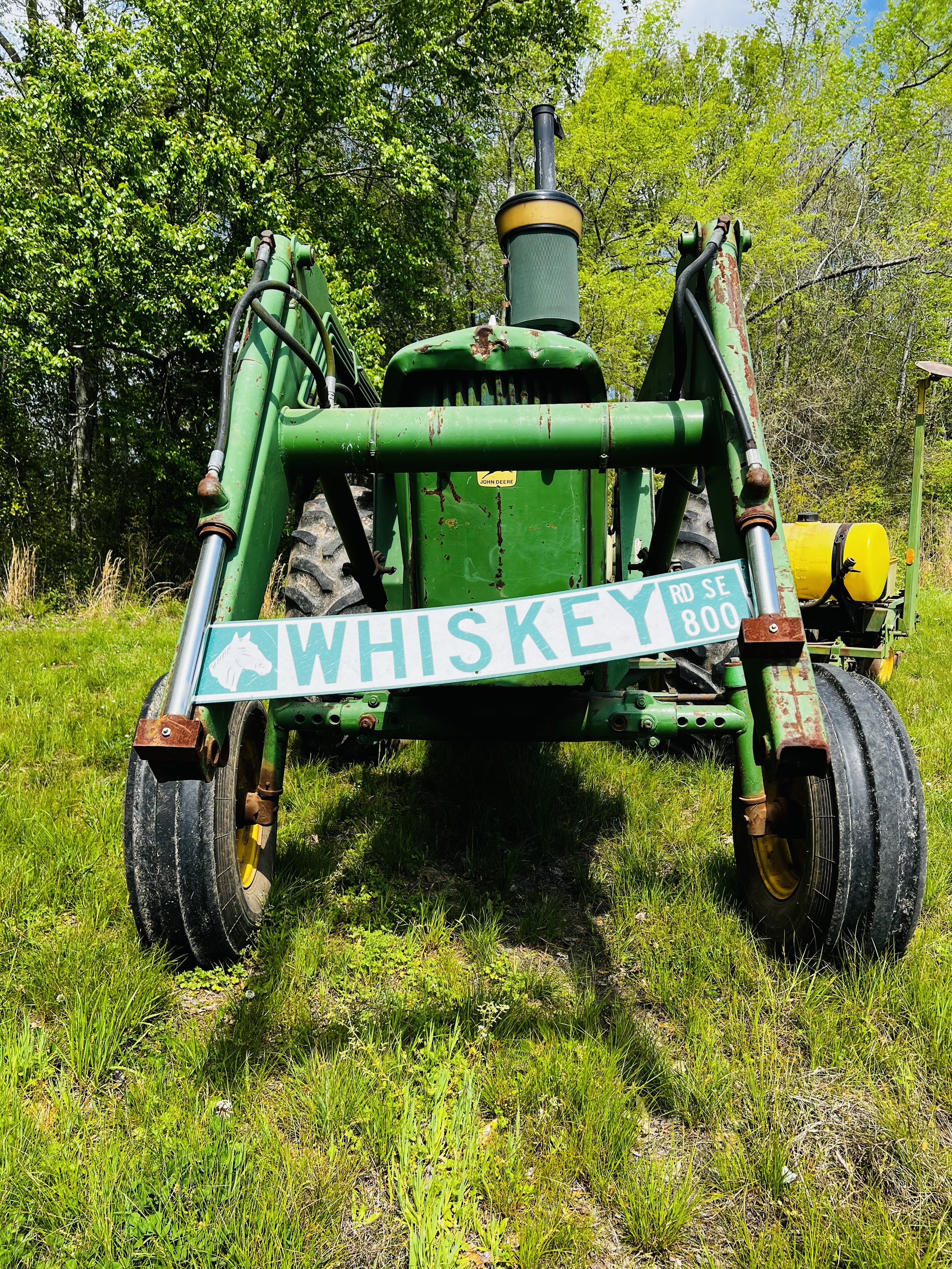
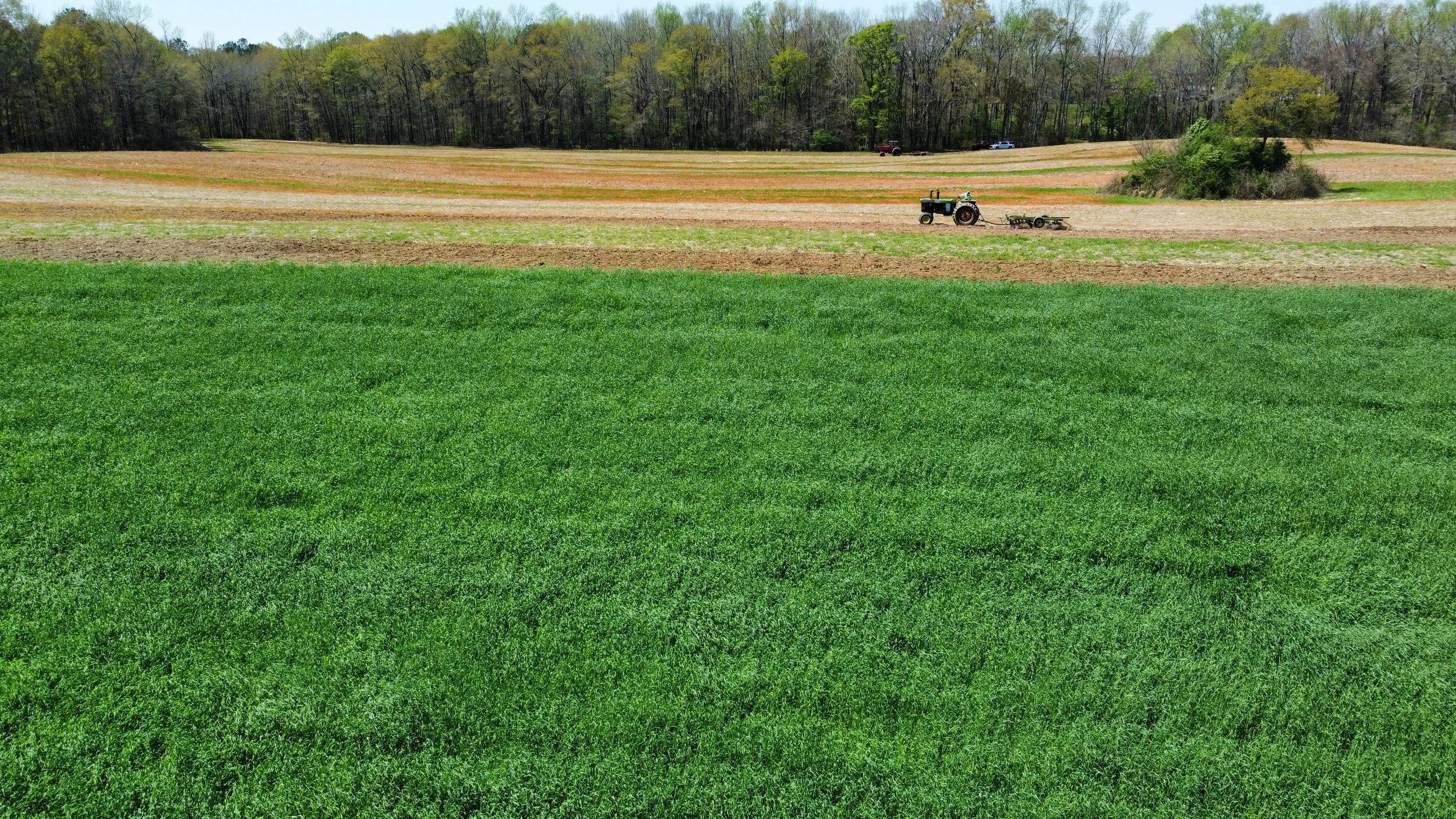
A reminder that on this farm, agriculture and whiskey move side by side.
BB: Your farm also supports a bee program with a beekeeper on staff. Bees play an essential role in agriculture through pollination and ecosystem health. Can you share more about why maintaining healthy bee populations is important to your farm and how they contribute to the broader agricultural system you’re building?
DB: Oh, we absolutely love our bees, and I wish more people understood just how important they are to agriculture and to the health of our ecosystems.
Even though corn is technically wind-pollinated, I can tell you from walking our fields, with our beekeeper, that the bees still make a difference. Since establishing our bee program, we’ve noticed our corn ears are often larger and more fully developed, which ultimately leads to better yields. When you have strong pollinator activity moving through a healthy field, the entire system just seems to perform better.
But the impact goes far beyond the corn.
Our bees move throughout the farm, pollinating our kitchen garden, the wildflowers, and the surrounding vegetation. That activity supports a much broader ecosystem….benefiting other pollinators, birds, and wildlife that rely on those plants as well. When the bees are thriving, it’s usually a sign that the land itself is healthy.
For us, the bee program is really part of a bigger philosophy about caring for the farm as a living system. The soil, the crops, the pollinators, the bats that help control insects at night—everything works together. When that balance is healthy, the land produces better grain, and that ultimately shows up in our whiskey and in your glass.
So while people may think of whiskey as something that begins in a still or a barrel, for us it really begins much earlier…..with healthy soil, thriving fields, and yes… a few thousand hardworking bees helping the farm along the way.
The Philosophy Behind the Whiskey
The word “craft” is used frequently in today’s whiskey industry, yet its meaning has shifted over time. For Paige Dockweiler and Amy Brown, the philosophy behind their whiskey is rooted less in marketing language and more in stewardship of the land and the agricultural rhythms that shape the grain itself.
BB: Since your whiskey is currently being contract distilled, how did you approach developing the recipe? Was it shaped by family tradition, or did you build the mash bill around the flavor profiles you most admire in other bourbons and whiskeys?
DB: That was actually one of the more enjoyable parts of the journey….and yes, it involved a fair amount of “research.”
When we began developing our recipe, we spent a lot of time tasting bourbons from across the country. Different mash bills, different proofs, different aging profiles. We paid attention to what we loved in a glass and also what didn’t resonate with us.
We looked closely at flavor….sweetness from the corn, spice from the rye, mouthfeel, aroma, the balance between grain and barrel. We explored everything from higher-rye bourbons to very corn-forward spirits, even tasting expressions that leaned heavily toward single grains just to understand how each one behaved.
Little by little, those tastings helped us narrow things down.
Because we grow Jimmy Red corn, we knew we wanted the corn character to really shine. It has such a beautiful sweetness and depth of flavor that we didn’t want to bury it under an overly aggressive rye profile. So the mash bill evolved toward something that would let that corn express itself while still giving the whiskey enough structure and complexity.
Working with our distilling partners allowed us to refine that further….adjusting fermentation, proof points, and barrel entry until we found a profile that felt like ours.
So while there’s no century-old family mash bill tucked away in a drawer somewhere, (we only could hope for that), there was a lot of thoughtful tasting, learning, and refining along the way.
You could say the recipe came from equal parts curiosity, experimentation… and a lot of glasses of bourbon sitting on our front porch watching the sunset over the fields.
BB: When you design a mash bill, do you begin with the grain, the flavor profile you want in the glass, or something else entirely?
DB: For us, it always begins with the grain.
Because we’re growing Jimmy Red corn and Abruzzi rye on our farm, the flavor of those grains really guides everything we do. If we were designing a mash bill purely from a distilling standpoint, it would honestly be much easier to just purchase commodity grain and build a recipe around efficiency.
But that’s not the goal for us.
We want the character of our farm to show up in the glass. The sweetness and richness that Jimmy Red corn brings, the spice and structure from the Abruzzi rye….those are the flavors we start with. From there, the mash bill becomes a way of highlighting those grains rather than hiding them.
From there, the mash bill becomes a way of highlighting those grains rather than hiding them.
So instead of asking, “What mash bill should we make?” we really start by asking, “What do our grains want to become?” Then we build the recipe in a way that lets those flavors shine.
Because at the end of the day, the whole point of growing the grain ourselves is to let the terroir of our farm speak through the whiskey.
BB: How does your farming background influence the way you approach fermentation and distillation?
DB: Our farm and the generational legacy of farmers influence almost every decision we make when it comes to fermentation and distillation.
Farmers learn very early that you can’t rush natural processes. You prepare the soil, plant the seed, and then you allow time and nature to do their work. That same mindset carries directly into fermentation….seed, time, harvest!!
Fermentation, much like farming, is a living process. You’re working with yeast, temperature, grain chemistry, and time. Our instinct isn’t to push or rush it, but to let the grain express itself and allow fermentation to develop the flavors that naturally come from it.
Because we grow our own grain, we also think differently about the raw material going into the process. We’ve watched those plants grow in our fields, seen how the weather affected them that year, and handled the harvest ourselves. That connection makes you pay very close attention to how the grain behaves once it enters the fermenter.
Distillation, then, becomes more about honoring what the grain has already given you rather than trying to force something new out of it.
As Farmers, we spend a lot of their lives observing…watching the land, the weather, the crops and that habit of observation translates well into distilling. You learn to pay attention to subtle changes, trust the process, and make careful adjustments along the way.
In many ways, both farming and distilling reward the same qualities: patience, respect for nature, and the willingness to let time do its work.
BB: In a world of large whiskey producers, what does “craft” truly mean to you?
DB: That’s a great question, because the word “craft” gets used a lot these days.
Quite a few brands will slap the word on a label because it resonates with consumers, but for us it carries a much deeper meaning.
For us, craft means being tied directly to the land and accepting whatever it gives you each year. Because we grow our own grain, our whiskey really begins with the seed going in the ground. If the season is generous and the crops are strong, we’ll have more grain to distill and more barrels to lay down. If the year is tougher….less rain, too much heat, or difficult growing conditions..then there’s simply less grain and less whiskey.
Large producers can source grain from anywhere and blend across massive inventories to smooth out those fluctuations so every bottle tastes exactly the same year after year.
But when you’re farming your own ingredients, you live with the rhythms of the land. Every growing season is different. The rainfall changes, the heat changes, the timing of the seasons shifts and those things influence how the grain develops.
As farmers, we’ve learned that nature isn’t meant to be perfectly controlled. It’s meant to be understood and respected.
So, craft, to us, means working with those differences rather than trying to erase them. It means taking what the land gives you and making the very best whiskey you can from it. You don’t force every bottle to be identical, just like every season is different….in farming and in life.
Instead, you let each harvest tell its own story.
And in that way, every barrel becomes a quiet record of the land and the year it came from.
Women, Leadership, and the Changing Whiskey Landscape
Women have long played a role in American distilling, even when their contributions were not always recorded in the historical record. Readers interested in exploring that history further can find a deeper look in my article “Not a Footnote: Women in the Architecture of American Whiskey.”
BB: Doc Brown Farm & Distillers is a women-owned operation. Have you encountered any challenges along the way that you feel might be different from those faced by male-owned distilleries, or has the experience shaped your approach to building the business in unique ways?
DB: Yes, we’ve certainly encountered moments along the way that remind us this industry has traditionally been male-dominated. But we’ve never let that become the focus of our journey.
I entered the banking world back in 1985, and the boardrooms were almost entirely filled with men. Early on, I had a boss who tried to steer me into being ‘his secretary’ rather than recognizing the strategic thinker I knew I was capable of becoming. Instead of fighting that battle head-on, I simply showed up every day and did the work….bringing creativity, strategy, and ideas to the table. And on the days when it wasn’t easy, I reminded myself to still lead with kindness.
Over time, people tend to recognize consistency and competence. That experience shaped how I approach business today. Paige and I both come from families who raised us to be, as she likes to say, “good eggs.” We believe deeply in the Golden Rule….treat people the way you’d want to be treated….and we also believe that what you put out will be exactly what is fed back to you….that karma bus does tend to circle back around.
So, when we walk into conversations about farming, grain, or whiskey, we focus on what we know and what we’re building. And interestingly, we’ve found that many people…men included…are genuinely intrigued by the agricultural side of what we’re doing….and that we can handle big ole tractors and equipment as good as they can.
At the end of the day, we’re simply passionate about the land, the grain, and the whiskey that grows from it.
Does kindness and respect solve every challenge? Of course not….wouldn’t that be a wonderful world.
But it’s the way we’ve chosen to walk through this industry, and our hope is that folks will look past ‘being women’ and see us as good stewards to the land and to humanity.
BB: The whiskey industry is often described as traditionally male-dominated, though history shows women were present from the earliest days of American distilling—sometimes visibly, and sometimes in ways that were less documented. As more women enter roles in distilling, blending, and ownership today, do you feel the culture of the industry is beginning to shift in meaningful ways?
DB: I do believe we’re seeing a meaningful shift, and honestly, it’s an incredible time to be part of this industry.
Women have always been involved in American distilling, even if history didn’t always record their names as clearly as it should have. In the earliest days of farm distilling, women were deeply involved in the work—managing farms, tending mash, running family businesses, and keeping operations moving forward. Their contributions were real, even if the records didn’t always reflect it.
What’s exciting now is that those stories are finally being recognized, and new ones are being written every day. We’re seeing more women step into roles as distillers, blenders, farmers, brand builders, and owners. And they’re not just participating…they’re shaping the direction of the industry in meaningful ways.
Paige and I often say this feels like stepping into a riptide of momentum. The current is moving quickly, and it’s pulling the industry toward something more inclusive and more dynamic than it’s ever been before.
I also think women bring a slightly different perspective to the work. Many of us come at it from a place of stewardship…of land, of community, of family and of collaboration. When you combine that with the craftsmanship of distilling, it creates something really special.
But perhaps the most important part is honoring the women who came before us…the ones who worked quietly behind the scenes, who supported families and farms, who kept traditions alive even when their names weren’t written in the history books.
Because the truth is, they were always part of this story.
Now we’re simply helping make sure their legacy, and the next generation of women, has a visible place in it.
BB: For women who may be interested in entering the whiskey industry—whether in farming, distilling, or ownership—what advice would you offer from your own experience building Doc Brown Farm & Distillers?
DB: I always laugh a little when people ask for advice, because my first instinct is to say, “Don’t do it.” And I say that with a smile.
Not because the industry isn’t wonderful…it absolutely is….but because it’s incredibly hard work. From farming the grain to distilling, aging, and then trying to earn a spot on a crowded store shelf, this business asks a lot of you.
So my first real piece of advice would be this: it has to be your passion.
If it’s not something that lives deep in your soul, the challenges will eventually wear you down. But if it truly is your passion, then the hard days become part of the journey rather than a reason to quit.
The second thing I’d say is to learn everything you can from the people who have been in this space before you. One of the beautiful things about the whiskey world is that there are so many generous and knowledgeable people willing to share what they’ve learned.
But you have to come in with humility.
This isn’t an industry where a “know-it-all” attitude serves you well. There’s always more to learn….from farmers, distillers, coopers, blenders, distributors, and the people who have spent decades perfecting their craft.
If you show up curious, willing to listen, and committed to the work, you’ll find mentors everywhere.
And over time, you’ll realize the whiskey industry is less about competition and more about community.
Georgia’s Place in American Whiskey
While Kentucky and Tennessee dominate much of the conversation around American whiskey, other regions are quietly developing their own identities. Georgia’s agricultural heritage and growing distilling community are helping shape that story.
BB: Kentucky, Tennessee, and increasingly Texas tend to dominate much of the whiskey conversation today. At the same time, Georgia has quietly developed a growing distilling community, with roughly fifteen distilleries now operating across the state. What makes Georgia an exciting place to produce spirits, and how do you see the state carving out its own identity in American whiskey?
DB: If I had a nickel for every time someone asked me whether bourbon has to come from Kentucky, I’d probably be a very wealthy woman by now.
And to be clear, we have tremendous respect for Kentucky and Tennessee. Those states have set the standard for American whiskey and built an incredible legacy that the rest of us learn from.
Georgia is actually a very natural place for spirits to grow as an industry. Our number one industry in the state is agriculture, and that’s the foundation of everything in whiskey. We grow incredible grain, and farming is deeply woven into the identity of our state.
At the same time, Georgia has a strong culture of entrepreneurship and creativity. We have major Fortune 500 companies headquartered here, a thriving music industry, and one of the largest film industries in the country. There’s a lot of energy around building new things.
And we’ve already seen that creativity shows up in other beverage industries. Georgia has produced some wonderful winemakers and craft brewers over the years, so in many ways, spirits are simply the next chapter in that evolution.
As more distillers emerge across the state, I think Georgia will carve out its own identity….one that’s rooted in agriculture, regional grain, and the unique climate of the Southeast.
In our case, that identity begins in the Piedmont soils and the grain we grow on our farm.
And I think that agricultural connection is going to be one of Georgia’s greatest strengths as its whiskey story continues to unfold.
BB: Do you see a distinct identity emerging for Georgia-grown whiskey?
DB: Yes, I really do believe a distinct identity for Georgia-grown whiskey is beginning to emerge.
Part of that comes from the agricultural foundation of our state. Georgia is, at its core, a farming state. When you start with the grain…how it’s grown, the soil it comes from, and the climate it develops in…you begin to see regional character develop…that is IF the distiller uses grains from here.
Our climate in the Southeast also plays a role. We have long, warm growing seasons and hot, humid summers, which influence both how the grain develops in the field and how the whiskey matures in the barrel. Those environmental factors will inevitably create flavor profiles that are different from what you might see in Kentucky or Tennessee.
Another piece is the creativity of the distillers themselves. Georgia’s distilling community is still relatively young compared to some other states, and that means there’s a spirit of experimentation and innovation. Distillers here are exploring different grains, mash bills, and approaches to whiskey making.
And because many of us come from strong agricultural backgrounds, there’s also a growing focus on regional grain and terroir….letting the land itself shape the spirit.
So I do think a Georgia identity is forming, and it will likely be rooted in agriculture, warm-climate maturation, and the willingness of distillers here to explore and experiment.
In many ways, we’re watching that story unfold in real time.
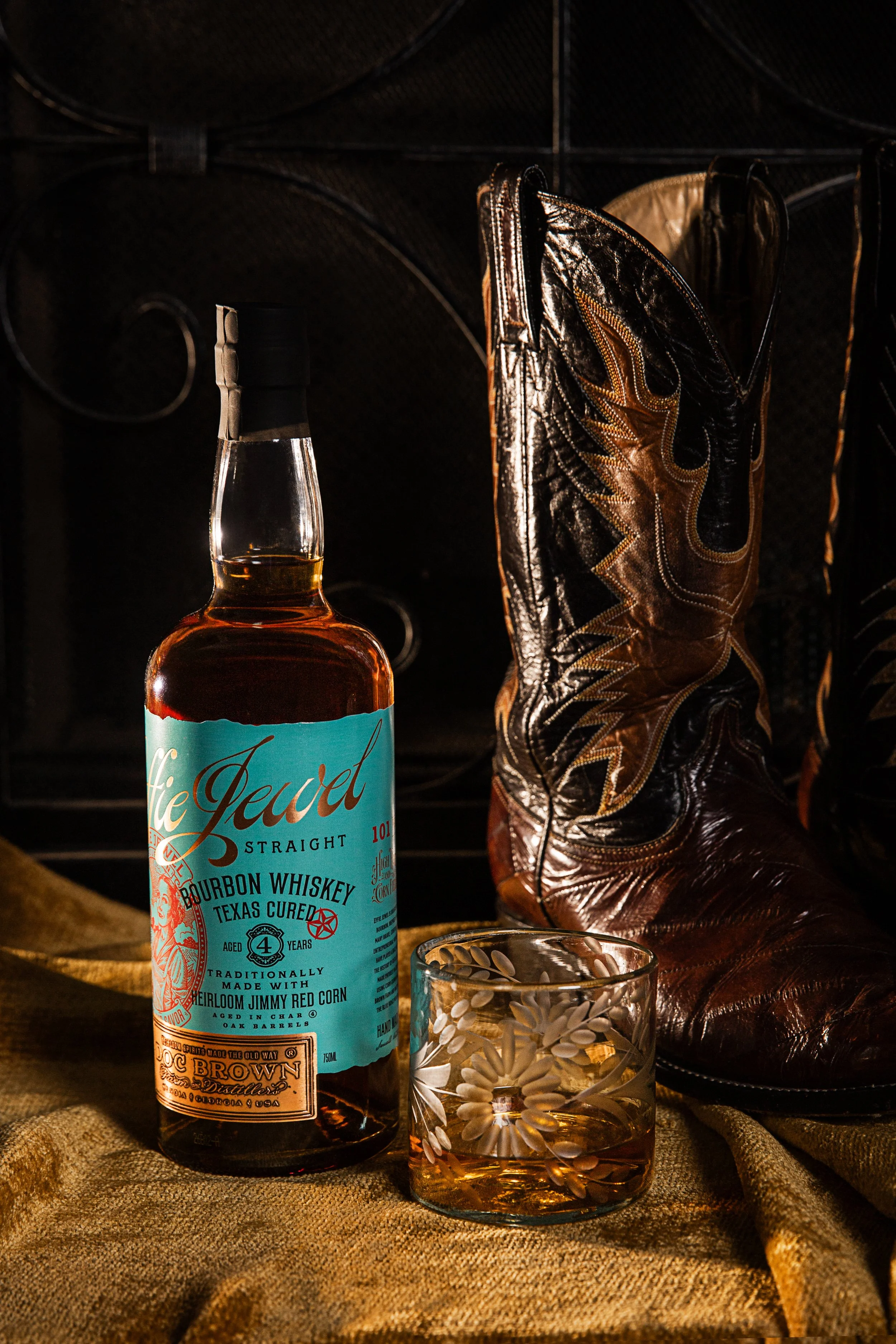
Effie Jewel Texas, a reflection of grain, place, and the hands that shaped it.
The Road Ahead
As Doc Brown Farm & Distillers continues to grow, Paige and Amy remain focused on experimentation, collaboration, and letting the land guide the future of their whiskey.
BB: What spirit or expression are you most excited about right now?
DB: One of the things we love about being a small craft producer is that it gives us the freedom to experiment.
We’re not locked into producing one single profile year after year, so we can take some risks and explore how different environments and finishes influence the spirit. Some experiments work beautifully, some teach us lessons, but that spirit of curiosity keeps things exciting.
A great example is a project we did with eight barrels that we sent to friends of ours in Galveston, Texas. Their distillery sits right between the bay and the Gulf, so those barrels spent their time aging in intense Texas heat and humidity with salt air circulating around them every day. That environment did something truly special to the whiskey, and it helped shape our current release of Effie Jewel in a way we absolutely love.
We’re also aging barrels in Santa Fe, New Mexico, which is a completely different environment. Here in Georgia our farm sits around 600 feet above sea level, but Santa Fe is closer to 7,500 feet. So now we’re watching what high elevation, dry air, and cooler nights do to the maturation process. It’s fascinating to see how the same spirit evolves differently depending on where it lives.
On top of that, we’re exploring some unique barrel finishes as well, just to see how they interact with the grain character from our farm.
So, we’ve got a lot of exciting things happening right now.
In fact, just last night we hosted a class and one of our longtime supporters said something that really stuck with us. She said, “What I love about your bourbon is that every expression you release is different, and each one has its own personality.”
And honestly, that’s exactly what we hope to do!!! Continue growing these incredible grains on our farm while creating new and interesting expressions through different aging environments and finishes that folks line up to buy.
Because like us as individuals, every person has a story, and we believe every barrel of ours also tells a great story.
BB: Are there particular grains, mash bills, or techniques you’re experimenting with that reflect the character of your farm?
DB: Yes, we’re very excited about several experiments we have underway right now.
As we mentioned earlier, being a small craft producer gives us the freedom to explore different aging environments and barrel finishes, and many of those experiments tie directly back to the philosophy we follow on the farm. We often describe our approach as “seed to sip,” because the journey really does begin in the soil and carry all the way through to the glass.
One of the directions we’re exploring involves barrel finishes that connect with other producers around the country….particularly women who are creating beautiful expressions in wine, spirits, and other beverages. It’s a way of honoring their craft while allowing those barrels to interact with the character of the grains we grow on our farm.
Those collaborations are exciting because they bring together different regions, different climates, and different perspectives on flavor.
At the same time, the heart of it always comes back to the grain. Our Jimmy Red corn and Abruzzi rye provide the foundation, and the finishes simply allow us to explore how those flavors evolve in new and interesting ways.
So, while we’ll continue growing the grains that thrive on our land, we’re also excited to see how these experiments unfold….especially the ones that celebrate the creativity of other makers across the country.
Watching those expressions develop over time is going to be a lot of fun.
BB: Five or ten years from now, what do you hope people say about Doc Brown Farm & Distillers?
DB: Oh wow… that’s a question that reaches a little deeper than whiskey.
If you took the distillery part out of it for a moment, Paige and I would both hope that our family, our friends, and the communities we’ve been fortunate to be part of would say we were kind stewards of what we were given.
That we tried to take care of the land, the people around us, and the opportunities that came our way. That no matter where someone came from or what walk of life they were on, we treated them with love, kindness, and respect….even when we didn’t always agree.
And as grandparents to six beautiful grandchildren, we hope they grow up seeing that a life built on hard work, dreams, passion, and kindness is a life well lived…regardless of how large or small the bank account may be. True success isn’t about money. It’s about living in a way that leaves the world a little better, showing kindness where it’s needed most, and using the gifts you’ve been given for the good of humanity.
Now, if you bring the distillery back into the picture, I’d hope people would say that Doc Brown Farm & Distillers reflected those same values.
That we honored the land that grew our grain, respected the traditions of the whiskey industry from the men and women before us, and maybe added a little creativity and joy along the way.
And if someone picked up a bottle years from now and said, “You can tell the people behind this cared about what they were doing,” that would probably mean more to us than anything else.
Because in the end, if people remember us as kind stewards of the land and the craft, we’ll feel like we did something right and that our whiskey is simply a reflection of the people and the land that created it.
One Final Question
BB: When someone pours a glass of your whiskey, what do you hope they taste that speaks to your farm and your story?
DB: When someone pours a glass of our whiskey, we hope they taste more than just what’s in their glass.
We hope they taste our farm….the red clay soils of the Piedmont, the grains that grew in our fields, the seasons that shaped the harvest, and us as the caregivers. We hope they sense the patience that farming teaches you and the care that goes into every step from seed to sip.
But more than anything, we hope they feel the heart behind it.
We didn’t begin this journey simply to make bourbon. We began it to care for a piece of land, grow something honest from it, and share that story with others. What we didn’t realize at the start was how many incredible people we would meet along the way. I say it often….this adventure has introduced us to some of the most generous, creative, and genuine folks we’ve ever known. Had we never stepped into this world, we would have missed those friendships entirely, and to us that may be the greatest gift of this entire journey.
So, if someone takes a sip and feels a connection…not just to the whiskey, but to the farm, to us, and to the care behind it…then we feel like we’ve done something right.
Because at the end of the day, the whiskey is simply our way of sharing a small piece of our land and our lives with others.
April, thank you…and thank you to the Weller family behind you whose pioneering spirit helped carve the path that allows people like us to step into this journey and carry the story of American whiskey forward.
Reflections from the Glass
One of the most thoughtful parts of my conversation with Paige and Amy came when we stepped away from distilling and began talking about something broader. In many ways, we agreed that modern society has, to a degree, outsmarted itself. Technology has made information instantly accessible, yet it has also created distance between people and the natural world that sustains them.
Generations before us understood the rhythms of the land. They knew where their food came from, how crops were grown, and what it meant to work alongside nature rather than trying to outmaneuver it. Today, many people know more about what they can search online than what they can learn by walking through a field or placing their hands in the soil.
For farmers, that connection to the land never fully disappears. Paige and Amy understand that whiskey, much like farming, begins with patience and respect for the earth. From the soil where the grain is planted to the forests that produce the white oak for the barrel, the land shapes every part of the final spirit.
In the wine world, this is often described as terroir: the idea that the earth itself contributes to the character of what is produced from it. Bourbon is no different. The soil, the climate, the grain, and even the oak leave their fingerprints on the whiskey we eventually pour into a glass.
That is why the work of small distilleries like Doc Brown Farm & Distillers feels so important. Their approach reminds us that bourbon is not simply a product of technology or industrial efficiency. At its heart, bourbon remains an agricultural spirit.
And like farming itself, the best results rarely come from rushing the process, but from working patiently with the land and allowing time to do what time does best.
In the end, bourbon still begins where it always has— in the soil, long before it ever reaches the barrel.
Where to Find Doc Brown Farm & Distillers
Readers interested in exploring Doc Brown Farm & Distillers firsthand can currently find the brand in Georgia, Texas, and through online ordering. Their lineup includes a range of limited releases and flavored bourbon expressions that reflect the same spirit of experimentation and agricultural influence discussed throughout this conversation.
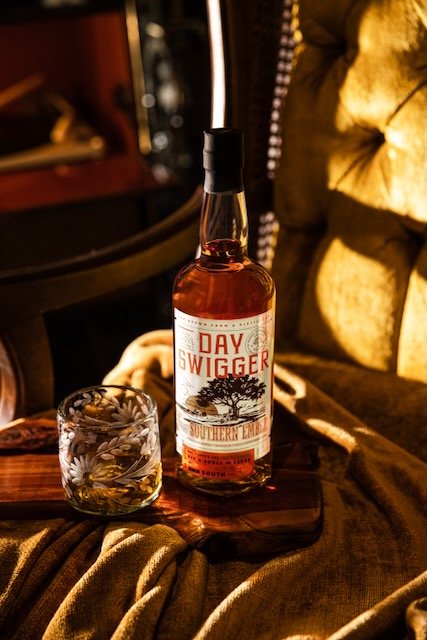
• Day Swigger Southern Ember • Day Swigger Butter Pecan • Effie Jewel Batch #2 Bourbon, Texas Cured • Day Swigger Honey Flavored Bourbon • Day Swigger Hot Honey Flavored Bourbon • Bourbon Cream Peppermint Mocha • Bourbon Cream Espresso • Bourbon Cream Salted Caramel • Bourbon Cream Butter Pecan
Available in bottles or in:
• Day Swigger Multi Pack (all four flavors) • Bourbon Cream Multi Pack (all four flavors)
For current availability, product details, and purchasing information, visit https://docbrownfarm.com
From The Same Table
For readers interested in exploring more of the history and people shaping American whiskey, you may also enjoy:
